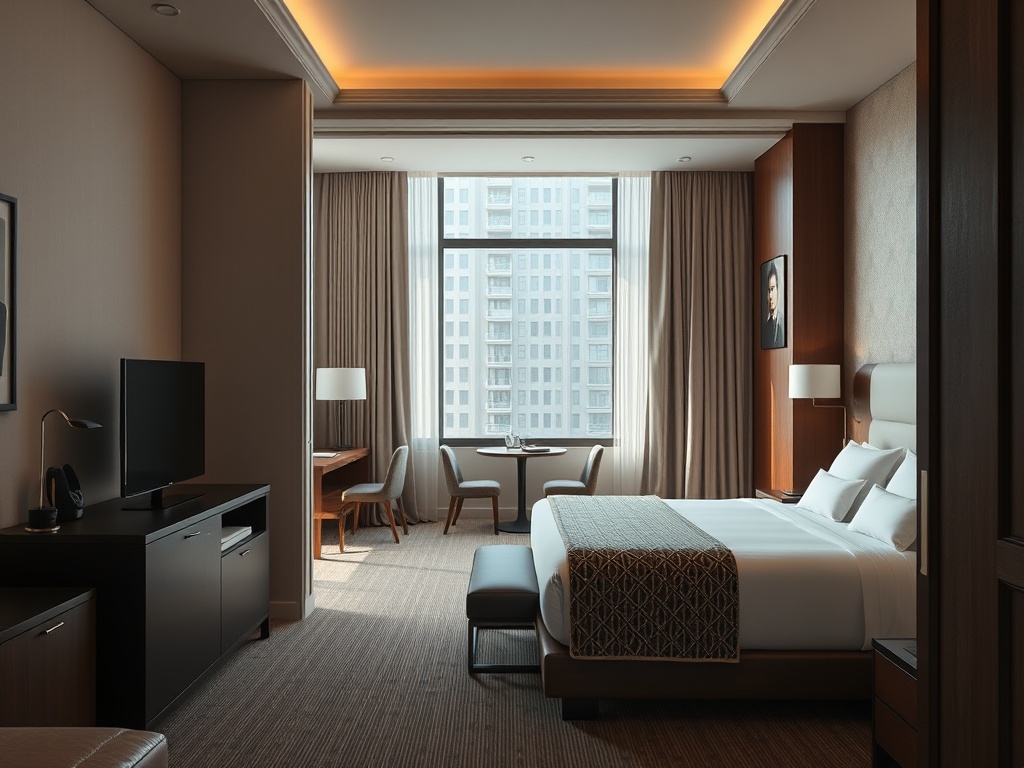
A hotel suite usually signals more space or a separated living area, but the word is not a reliable substitute for checking the actual floor plan, bedroom count, bed types, bathroom layout, view, accessibility features, occupancy limit, and included services. First-time travelers should compare the specific room description and total price rather than assuming every suite provides the same kind of privacy or upgrade.
Suite Booking Snapshot
- Check whether the living and sleeping areas are truly separated by a door or simply divided within one open room.
- Verify beds and maximum occupancy; a sofa or sitting room does not automatically mean suitable sleeping space.
- Compare the suite total with booking two rooms if privacy, bathrooms, or separate beds matter more than one large space.
What makes a hotel room a suite?
There is no single consumer-facing definition that works across every hotel worldwide. Some suites have a bedroom behind a closing door and a separate living room, while others are larger open-plan rooms or studio-style layouts. Use the floor plan, square footage or square meters, room photographs, and written bed configuration to understand what you are buying. If the hotel provides no floor plan, ask whether the bedroom is physically separated and whether any sofa is designed and prepared for sleeping.
What is the difference between a junior suite and a one-bedroom suite?
A junior suite often describes an enlarged room with a sitting area, while a one-bedroom suite more commonly suggests a distinct bedroom, but naming practices vary. The only safe comparison is the property’s exact layout. Ask about a closing door, number of bathrooms, location of the sofa bed, and whether someone using the living area can reach the bathroom without entering the bedroom. This is particularly important for families, coworkers, or friends who need privacy rather than simply more floor space.
How many people can stay in a suite?
Use the stated maximum occupancy, not the apparent size. Fire codes, bedding, age rules, and property policy can limit occupancy even when a room looks large. Enter every adult and child during the search so the rate and room selection are valid for the full group. For budget comparisons, the cheap hotel booking FAQ can help you compare one suite with multiple standard rooms by total trip cost, but the selected room still needs an appropriate bed and sleeping arrangement for every guest.
Is a sofa bed guaranteed in a suite?
No. A sofa can be decorative seating, a pullout bed, a daybed, or not suitable for sleeping at all. Check the written bed configuration and ask whether linens are supplied and whether using the extra bed changes occupancy fees. If a rollaway bed is important, request it separately because availability and room fire-safety rules may limit where one can be placed. Do not count a sofa as a bed when comparing rates unless the hotel specifically identifies it as sleeping accommodation.
Are suites always more accessible?
No. More square footage does not automatically mean mobility or communication accessibility. In the United States, the 2010 ADA Standards include requirements for transient lodging guest rooms and dispersion of accessible room types, but travelers should still book a room that specifically has the features they need. Ask about roll-in showers, grab bars, clearances, communication features, connecting routes, and bed height or other details relevant to you instead of treating suite size as a proxy for accessibility.

Does a suite include club lounge or butler access?
Only when the rate or room benefits say so. A suite may be sold as extra space with no special service, while a particular club-level room could include lounge access. Likewise, the butler service FAQ explains why personalized service should be verified separately. When comparing upgrades, list the physical room benefits and service benefits in different columns so you can see whether the premium is paying for space, view, food, service, or a combination.
Is one suite cheaper than two standard rooms?
Sometimes, but compare the full totals and the practical layout. Two rooms may provide more beds, two bathrooms, and stronger privacy, while one suite can keep a family together and provide a shared living area. Check connecting-room guarantees if you are considering two rooms; adjoining or connecting requests are not always guaranteed unless the hotel says so. Also compare cancellation conditions because two room reservations can create a larger financial commitment if plans change.
What extra charges can apply to a suite?
Potential differences can include higher taxes tied to the room rate, additional-person charges, resort fees where applicable, paid rollaway beds, club access, premium breakfast, parking, and deposits. In the United States, sellers advertising short-term lodging prices are subject to the FTC’s lodging-fee transparency rule for mandatory fees they can calculate upfront. Still, review the final payment details and optional extras before booking so the upgrade decision is based on the total stay cost.
What should I ask before booking a special-occasion suite?
Ask for the exact view category, floor or location range, bedroom separation, bathroom setup, balcony details, noise considerations, accessibility, and any included celebration benefits. Avoid assuming a photo represents every room in the category. If the stay is expensive or tied to an event, review the cancellation policy FAQ before paying for a restrictive rate. The best suite for a celebration is the one whose confirmed features matter to you, not simply the category with the grandest name.
A Suite Comparison That Avoids Surprises
Write down these details for each room you are considering:
- total size and whether the bedroom closes with a real door;
- number and type of beds plus confirmed maximum occupancy;
- bathroom count and access from sleeping and living areas;
- view, floor, balcony, and noise-sensitive location details;
- accessible features required by any traveler;
- service benefits, cancellation terms, and full stay price.
Book the Layout, Not the Suite Name
The word suite is a starting point for research, not a guarantee of a particular layout or service level. Verify bedroom separation, beds, bathrooms, occupancy, accessibility, and included benefits, then compare the total with other room combinations. When the physical layout fits the people traveling, the upgrade is easier to judge on real value instead of a category label.
Before confirming, write down the two or three suite features that are non-negotiable for your group. For one traveler that may be a separate bedroom; for another it may be a second bathroom, an accessible layout, a kitchen, or a specific bedding setup. Ask the property to confirm those features for the exact category you are booking. This prevents attractive photos or broad category names from outweighing the practical details that determine whether the room will work once everyone arrives.