
Code updates can affect renovation scope and cost by changing which standards, local amendments, inspections, accessibility requirements, energy provisions, fire-safety upgrades, or structural checks apply to the work. The practical first step is confirming the adopted code edition and project classification before pricing the renovation.
Renovation code update brief: Ask which code edition applies, what local amendments exist, whether the project is a repair, alteration, addition, change of occupancy, or substantial improvement, and which triggers could expand the work. ICC’s code adoption resources and FEMA’s building code documents are useful starting points for understanding why local adoption matters.
Code updates change more than the permit set
A code update does not automatically mean every existing building must be rebuilt to the newest standard. Renovation rules are usually tied to the type and extent of work, the adopted code edition, local amendments, occupancy, hazard exposure, and the authority having jurisdiction. Still, code updates can change details that affect design time, materials, inspections, and budget.
For example, a simple finish refresh may have limited triggers, while a change of use, major structural alteration, addition, flood-zone improvement, or system replacement may bring wider review. The difference is not always obvious at the first site walk.
The International Code Council describes the I-Codes as coordinated model codes, but state and local adoption controls what applies on a real project. That is why project teams should confirm the adopted edition and amendments before treating a national model code as the answer.
Confirm which code edition and local amendments apply
Start with the building department or authority having jurisdiction. Ask which editions of the building, existing building, residential, energy, fire, mechanical, plumbing, electrical, and accessibility-related provisions are enforced. Then ask about local amendments, interpretations, permit bulletins, and thresholds that may affect the project.
Some jurisdictions adopt newer editions quickly. Others remain on older editions with local amendments. Some apply existing-building provisions differently based on occupancy or project size. Project teams should record the source of the answer, date of confirmation, and any pre-application feedback.
Early code research is especially important when an owner is deciding between reuse and a larger repositioning. A comparison of new construction vs major remodel: which fits your goals can help frame when code-driven scope makes a remodel less straightforward than expected.
Renovation triggers that often expand scope
Common triggers include change of occupancy, increased occupant load, structural alterations, additions, work in flood hazard areas, modifications to egress paths, fire-resistance-rated assemblies, accessibility upgrades, energy-related envelope or system work, and replacement of major building systems. Local rules determine how these triggers apply.
A code update can also affect product availability and documentation. Doors, hardware, insulation, glazing, firestopping, electrical equipment, guards, stairs, and mechanical systems may need updated submittals or listings. Older buildings may require creative solutions that satisfy safety intent while respecting existing constraints.
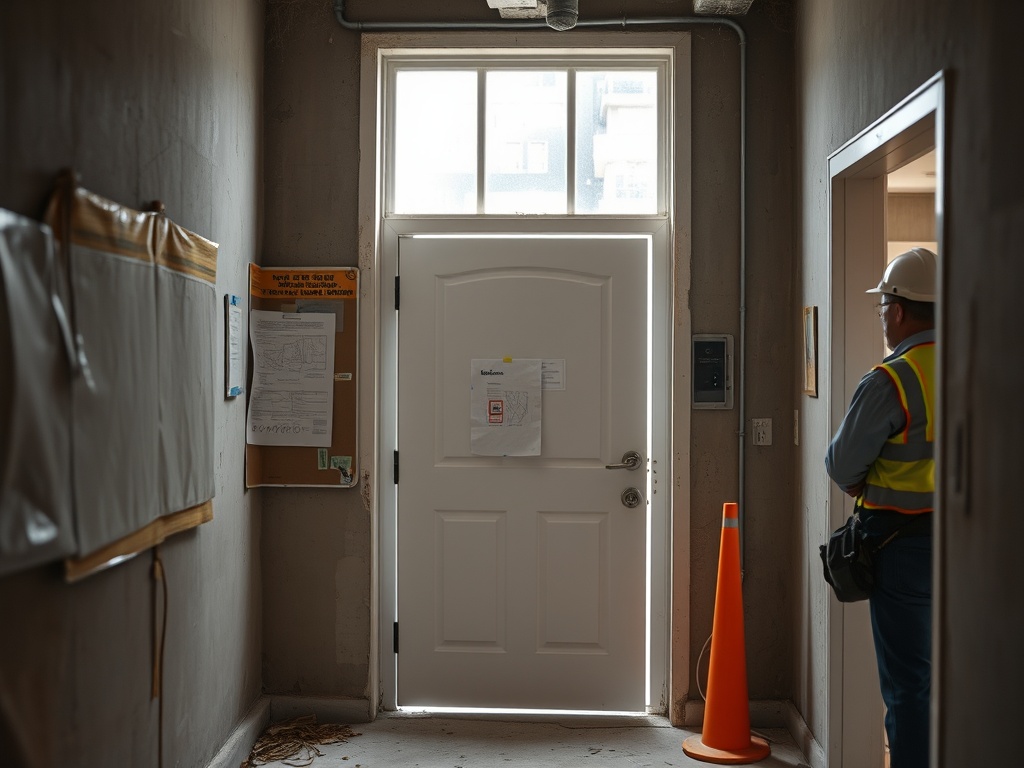
A practical code review workflow before pricing
First, define the project accurately. Is it repair, alteration, addition, change of use, tenant improvement, restoration, or a phased program? Second, gather existing documentation, including prior permits, certificates of occupancy, surveys, life-safety plans, and system records.
Third, confirm adopted codes and amendments with the authority having jurisdiction. Fourth, identify likely triggers and unknowns. Fifth, ask the design team to separate base scope from code-driven alternates. Sixth, carry a decision log so pricing changes can be traced to requirements, assumptions, or owner choices.
For older properties, code review should be coordinated with preservation goals. Renovating historic commercial buildings without losing performance requires the team to address safety and performance without casually removing significant features.
Scope and budget effects to discuss early
| Code-related issue | Possible scope effect | Budget conversation to have |
|---|---|---|
| Change of occupancy | Egress, fire protection, plumbing fixture count, accessibility review | Is the new use worth the added upgrade scope? |
| Addition | Structural, fire separation, energy, site, and accessibility implications | What existing systems must be extended or upgraded? |
| Flood or hazard area work | Elevation, flood openings, materials, utilities, or substantial improvement review | What documentation supports the valuation and scope assumptions? |
| Energy code update | Envelope, lighting, controls, HVAC, or commissioning requirements | Which upgrades are mandatory and which are owner preferences? |
| Fire-rated assembly repair | Firestopping, rated wall repair, door hardware, inspection access | What hidden conditions need investigation before bidding? |
Communication errors that create change orders
One error is pricing a renovation before defining the code path. Another is assuming the permit reviewer will accept old drawings without field verification. A third is treating code comments as design surprises when the risk was visible during planning.
Contractors and owners can reduce friction by separating verified requirements from allowances and assumptions. If the scope includes dust-generating demolition, the safety plan should also be current. A guide to dust control tools that reduce cleanup and health risks can support planning for occupied or sensitive renovations.
Budget structure can reduce conflict. Instead of burying code uncertainty inside a single number, ask the team to separate confirmed requirements, design allowances, owner options, and unknown conditions. That format makes it easier to decide whether a code-related change is a true requirement, a prudent risk allowance, or a scope preference that can be adjusted.
A short pre-application meeting can also be valuable where available. Bringing existing drawings, photos, proposed use, and a clear question list helps reviewers give more useful direction. The meeting may not guarantee approval, but it can reveal concerns early enough to affect design and pricing.
Specialist review can be worth considering when the scope touches structural work, fire protection, accessibility, energy compliance, historic features, flood provisions, or a change of use. The right consultant can translate requirements into design choices before the project is locked into a price based on incomplete assumptions.
A clear responsibility matrix also helps: one person tracks code questions, one tracks design responses, and one tracks cost impact.
Turn code research into cleaner renovation decisions
Code updates should not be treated as late-stage paperwork. They are planning inputs that affect design, budget, phasing, risk, and communication. The earlier a team confirms the governing rules and likely triggers, the easier it is to explain why scope changed or why a conservative allowance is justified.
Before setting a renovation budget, request a written code summary tied to the local jurisdiction and project classification. This content is for informational and educational purposes only and does not constitute legal, architectural, engineering, code, compliance, permitting, or project management advice; the authority having jurisdiction and qualified professionals control project-specific interpretation.