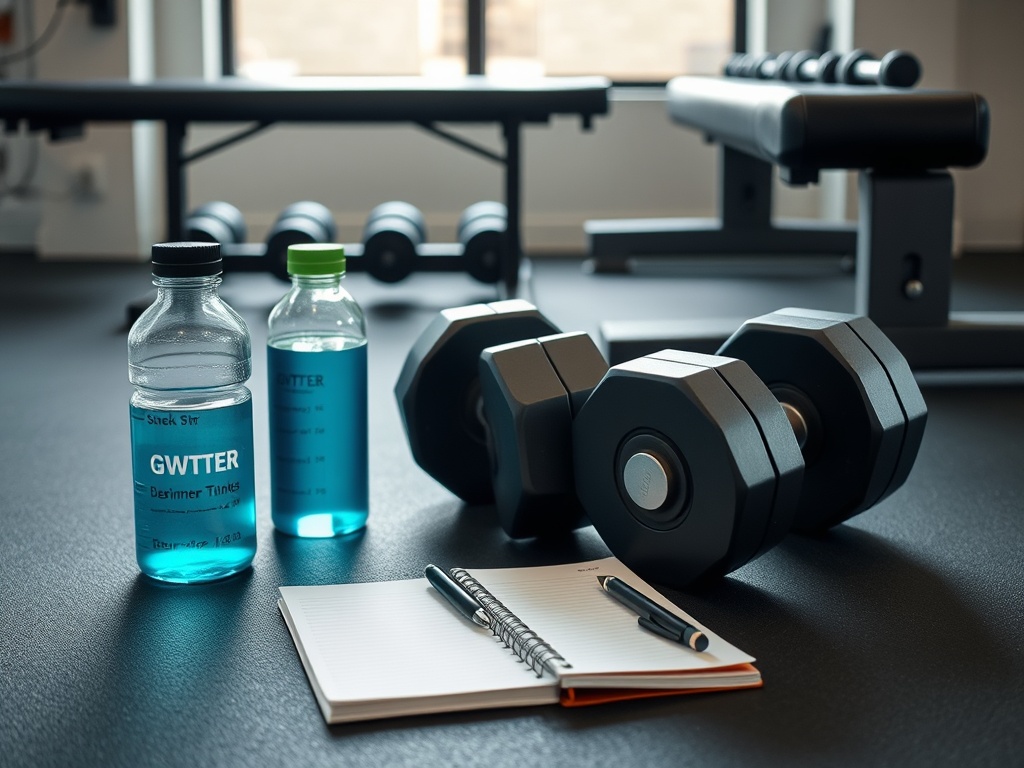
Gym terms are shorthand for how people train, recover, measure effort, and talk about progress. Learning them helps a beginner follow a program safely, ask better questions, and understand why a workout is written a certain way instead of copying random exercises.
TL;DR: Start with the words that change how you train: reps, sets, load, rest, tempo, range of motion, intensity, volume, recovery, and progressive overload. The rest of the vocabulary becomes easier once those foundations make sense.
How to Read Gym Language Without Feeling Lost
Most beginners do not need to memorize every phrase on day one. A better approach is to sort gym terminology into useful groups. Some words describe the movement, such as squat, hinge, press, pull, lunge, carry, plank, and rotation. Other words describe the dose, such as set, rep, weight, rest interval, frequency, duration, pace, and weekly volume. A third group explains how hard the session feels, including intensity, effort, RPE, RIR, fatigue, failure, soreness, and recovery.
This matters because the same exercise can serve different goals depending on the terms around it. A goblet squat for three easy sets teaches control. A barbell squat for heavy triples builds strength. A squat circuit with short rest trains conditioning. The movement name is only one part of the instruction. The surrounding vocabulary tells you what the workout is trying to accomplish.
The 75 Fitness Words Beginners Should Know
Movement pattern terms include squat, hinge, push, pull, carry, brace, rotate, lunge, step-up, row, press, curl, extension, flexion, abduction, adduction, mobility, stability, and range of motion. These words help you identify what the body is doing, not just which machine you are using. When a coach says to hinge, they usually mean the hips move back while the spine stays controlled. When a program says to brace, it means creating trunk tension before effort.
Workout structure terms include warm-up, working set, rep, set, superset, circuit, interval, rest interval, cool-down, split, full-body session, upper-lower split, push-pull-legs, tempo, pause rep, drop set, and finisher. These explain the order of work. For example, a superset pairs two exercises close together, while a circuit rotates through several exercises. Readers who want to understand how these pieces fit into strength programming can compare this glossary with muscle building basics.
| Term Group | Examples | Why It Matters |
|---|---|---|
| Movement | Squat, hinge, press, row | Shows what joints and muscles are emphasized |
| Dose | Sets, reps, load, rest | Controls training stress and recovery demand |
| Effort | RPE, RIR, failure, intensity | Helps you avoid training too easy or too hard |
| Progress | Volume, overload, adaptation | Shows whether the plan is moving forward |
Effort terms are often the most confusing. RPE means rate of perceived exertion, usually a 1 to 10 scale. RIR means reps in reserve, or how many good repetitions you could still complete. Training to failure means you cannot complete another rep with acceptable form. None of these are moral scores. They are tools for matching effort to the goal and the day. Beginners often progress better by stopping one to three reps before true failure while technique is still clean.

Cardio, Recovery, and Body-Composition Words
Cardio language includes aerobic, anaerobic, steady state, interval, zone 2, tempo, cadence, stride, pace, heart rate, max heart rate, and VO2 max. These words describe energy demand and pacing. The Physical Activity Guidelines for Americans recommend regular aerobic and muscle-strengthening activity, but they do not require beginners to chase advanced metrics immediately. A simple walk-jog plan can be enough for someone building capacity from scratch.
Recovery language includes sleep, active recovery, deload, mobility, flexibility, soreness, DOMS, inflammation, hydration, and readiness. DOMS means delayed-onset muscle soreness. It can occur after unfamiliar exercise, but soreness is not the same as workout quality. A session can be useful without leaving you sore, and a very sore session can still be poorly designed. If running terms are part of your confusion, starting to run before you can complete a mile explains pacing and walk-run intervals in beginner language.
Nutrition and body-composition terms include calorie, energy balance, calorie deficit, maintenance, surplus, macronutrient, protein, carbohydrate, fat, fiber, lean mass, body fat percentage, and hydration. These terms are often used casually online, so caution helps. A calorie deficit is a measurable energy concept, while claims about the “best” diet are usually interpretation. For protein basics, how much protein you really need gives more context without turning food into a math contest.
Common Misunderstandings to Avoid
One mistake is assuming technical language always means advanced training. A beginner can learn the word “tempo” without doing an elite program. Another mistake is treating every term as a rule. “Leg day,” “bulk,” “cut,” “metcon,” and “PR” are useful in context, but they are not requirements for general health. The goal is to understand instructions, not to sound like a fitness professional.
A second misunderstanding is confusing measurable terms with personal judgment. Load, reps, rest, and frequency can be tracked. Motivation, discipline, confidence, and enjoyment are real experiences, but they are subjective. Good fitness writing separates the two. The CDC adult activity guidance gives broad public-health targets; your exact gym vocabulary should support a routine that fits those targets and your current ability.
A Practical Way to Learn the Language
For the next two weeks, pick five terms from each workout and write what they changed about your session. If the plan says three sets of ten, notice sets and reps. If it says rest ninety seconds, notice whether that rest helped your form. If it says stop with two reps in reserve, practice ending before your technique breaks. This turns vocabulary into decision-making.
Keep the list nearby, but do not let terminology slow you down. The best sign of progress is not knowing all 75 words. It is being able to read a simple workout, understand the purpose, choose an appropriate weight, and finish with enough energy to train again. Once those basics feel natural, add more advanced terms only when your program actually uses them.