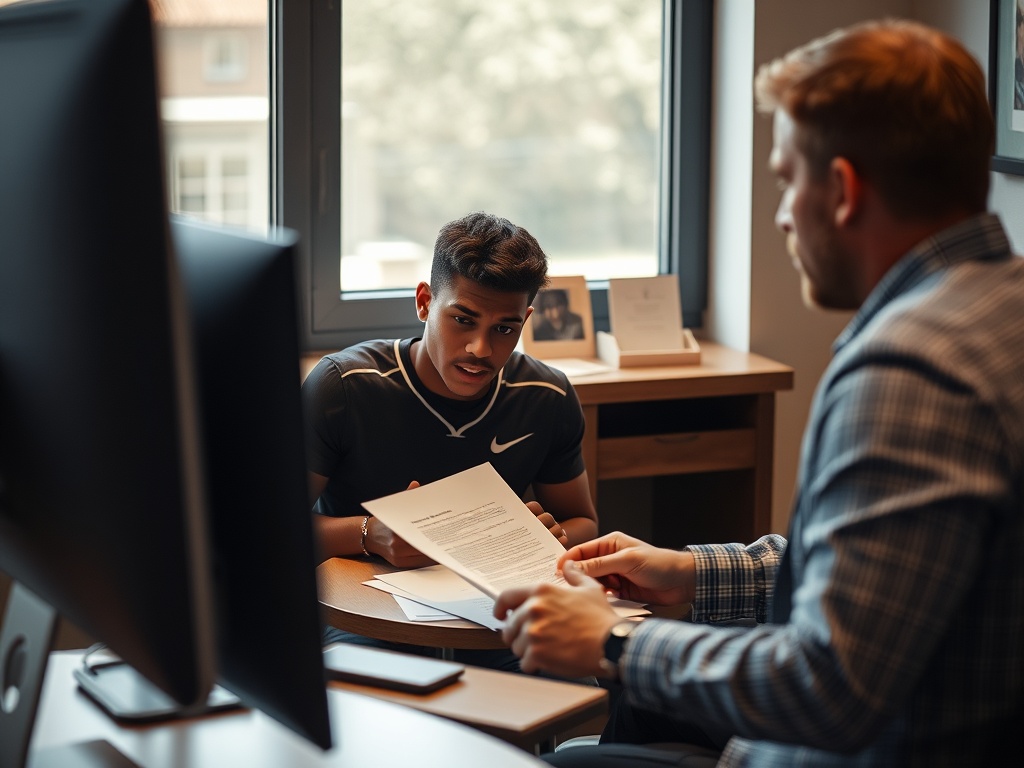
NIL stands for name, image, and likeness, and it refers to an athlete’s ability to benefit from their personal brand through activities such as endorsements, appearances, social media promotions, camps, or licensing. It does not mean every athlete is paid a salary by default, and rules can vary by level, school, state, and governing body.
TL;DR:
- NIL is about publicity rights and brand activity, not automatic professional status.
- Athletes need compliance guidance before signing deals, especially around school marks, disclosures, taxes, and eligibility.
- Fans and brands should separate confirmed agreements from rumors or social-media speculation.
Cluster: Sports Business, Media & Careers | Intent: Informational | Audience: Beginner | Funnel: Top of Funnel
The basic NIL meaning
Name, image, and likeness are the parts of a person’s identity that can hold commercial value. For college athletes, NIL created a pathway to earn from that identity while maintaining eligibility under the applicable rules. Examples include sponsored posts, autograph sessions, training camps, merchandise licensing, podcast appearances, and local business partnerships.
Who is involved in an NIL deal
The athlete is the central rights holder, but several parties may matter: the school, compliance staff, collectives, brands, agents, marketplaces, tax professionals, and sometimes state associations. The NCAA NIL Assist policy resources are a starting point for understanding college-level guardrails, but athletes should still follow their school’s compliance process before making commitments. Readers can connect this with How to Buy Game Tickets Without Overpaying or Getting Scammed for a practical next step and review NCAA NIL Assist policies when they need an authoritative reference.
What NIL is not
NIL is not a guarantee of equal earnings, a promise of playing time, or proof that an athlete has turned professional. It also should not be confused with scholarships, revenue sharing, employment classification, or transfer decisions. Those subjects may intersect with the college sports business landscape, but they are not identical to NIL.
| Focus area | What it means | How to use it |
|---|---|---|
| Athlete | Owns personal publicity value | Posts, camps, appearances |
| Brand | Pays for agreed promotion | Local or national campaign |
| School compliance | Reviews rules and restrictions | Policy and reporting process |
| Fans | Audience and customers | Support, scrutiny, discussion |
Why brands care
Brands see athletes as local and niche media channels. A softball player with a loyal regional following may be valuable to a local gym. A basketball player with strong short-form video skills may appeal to a training brand. The best partnerships fit the athlete’s audience and values rather than chasing a one-time post with little credibility. For a related angle, see Ranked Play Explained: MMR, ELO, Placement Matches, and Ladder Anxiety, then compare the idea with NCAA official site where relevant.
Risks athletes should understand
Athletes should review exclusivity clauses, deliverables, cancellation rights, intellectual property use, tax obligations, and whether school logos or facilities can appear in content. They should avoid verbal-only deals and unclear payment terms. Fans should also be cautious about assuming deal values unless they are officially reported or documented.
What NIL changes for fans
NIL gives fans another way to follow athletes beyond the scoreboard. It can also create confusion because social media posts may blend personal content and promotion. Fans should treat NIL rumors carefully and look for verified announcements. For a wider sports-business view, ticket buying, media trends, and esports ranking systems all show how fan attention can become part of a commercial ecosystem.
Applied checklist for nil explained
Before using the advice, define the exact situation. A fan, athlete, coach, parent, buyer, or player should know what decision is being made, what information is reliable, and what can be tested immediately. Write down the current goal in one sentence. Then choose the smallest action that would make the next practice, game, purchase, or viewing experience clearer. This keeps the article practical instead of turning it into background reading only.
Use a three-part checklist: context, action, and review. Context asks where the advice will be used and what limits exist. Action asks what the reader will do first. Review asks what evidence will show progress or a better decision. In sports and games, that evidence may be cleaner execution, safer behavior, lower cost, better understanding, more confident communication, or less emotional reaction under pressure.
Keep the checklist honest. Do not count a single good result as proof that the whole approach works, and do not treat one poor result as failure. Game environments vary. Courts, fields, opponents, teammates, devices, venues, rules, and personal stress can all change the outcome. The most useful habit is to compare similar situations over time and adjust one variable at a time.
Quality signals to watch in nil explained
The strongest signal is repeatability. A term is understood when the reader can recognize it during live play. A drill is working when control holds up under mild pressure. A buying decision is sound when the product or ticket fits the actual use case, not just the marketing claim. A mental routine is useful when it shows up after an error, not only during calm practice. A ranked routine is healthy when it supports learning without turning every session into a stress test.
The second signal is transfer. Advice should move from the page into a real setting. For athletes, that might mean using the cue during a scrimmage. For coaches, it might mean changing a constraint and observing a better decision. For parents, it might mean asking sharper questions before joining a program. For fans, it might mean watching a game with more confidence and fewer assumptions. Transfer is more valuable than memorization.
The final signal is sustainability. A plan that only works when the reader has unlimited time, money, energy, or perfect conditions is fragile. Good sports guidance respects recovery, safety, budget, access, and motivation. It also leaves room for uncertainty. When a claim involves current rules, ticket policies, eligibility, rankings, or official procedures, the reader should check the relevant authority before acting.
A useful final test is whether the reader can explain the idea to someone else in plain language. If the explanation becomes complicated, return to the simplest version: what is happening, why it matters, what action comes next, and what evidence would show improvement. That four-part pattern keeps the guidance practical for beginners while still giving intermediate readers enough structure to refine their choices. It also makes the article easier to revisit later, because the reader can scan the main cues and apply them again without starting from zero.
For readers building a broader foundation, How Coaches Use Small-Sided Games to Build Better Decision-Making adds another perspective without pulling this article away from its main topic.
Read NIL as a rights framework
Use this article as a practical reference, then apply one small piece during the next practice, match, purchase decision, or viewing session. The best next step is not to memorize everything at once; it is to test one idea, observe the result, and build from there.