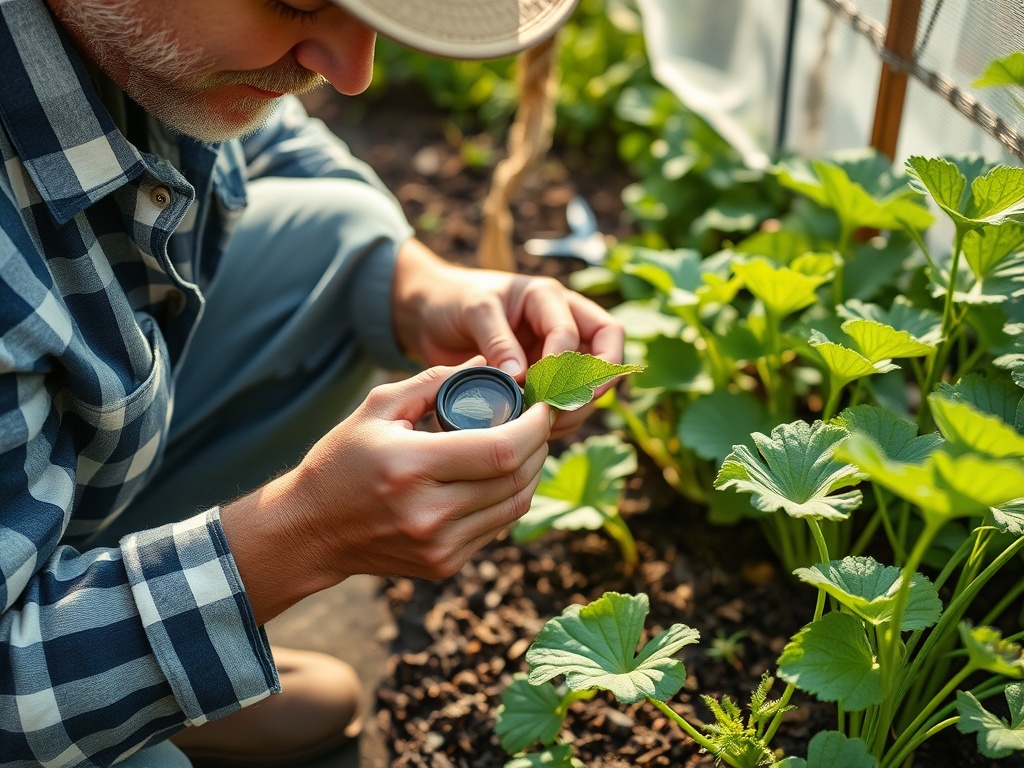
Organic garden pest control works best when it starts with correct identification, prevention, monitoring, and targeted action rather than routine spraying. The most dependable approach is integrated pest management: tolerate minor damage, use physical and cultural controls first, protect beneficial organisms, and choose a labeled treatment only when the problem justifies it.
Pest-Control Reality Check: "Organic" does not mean risk-free, and not every insect in a garden is a pest. Identify what is causing the damage, decide whether control is needed, and use the least disruptive effective option before escalating.
Start With Integrated Pest Management
The EPA's Integrated Pest Management principles describe IPM as a practical system built around prevention, monitoring, thresholds, and progressively more targeted control. The same logic applies to a home garden. Instead of treating the entire garden on a calendar, you respond to a specific, verified problem.
UC Statewide IPM guidance also places correct pest identification at the center of the process. That matters because holes in leaves can come from caterpillars, beetles, slugs, weather damage, or even normal leaf aging. A treatment chosen from symptoms alone can miss the real cause and harm beneficial organisms.
Step 1: Decide Whether You Actually Have a Pest Problem
Inspect the plant from several angles. Look at the undersides of leaves, new growth, stems near the soil line, buds, fruit, and nearby mulch. Note the pattern of injury. A few chewed leaves on a vigorous mature plant may be mostly cosmetic, while feeding on seedlings or growing tips can be more consequential.
Step 2: Use Physical Controls First
For many garden pests, the most direct control is mechanical removal. Hand-pick large caterpillars or beetles when practical. Prune out a small, heavily infested shoot. Use a strong stream of water to dislodge aphids from sturdy plants. Remove fallen fruit or badly damaged plant debris that can harbor pests.
Row covers can exclude certain flying insects from susceptible crops if installed before the pests arrive. They must be secured at the edges and may need to be removed or opened when insect pollination is required. Barriers work only when the pest is not already trapped inside.
For slugs, reduce hiding places and excessive surface moisture before adding products. Boards or traps can help monitor where they are active. The objective is to change the conditions that support the pest, not just kill individual animals.
Step 3: Make the Garden Less Favorable to Pests
Healthy plants are not immune to pests, but good cultural practices can reduce stress and prevent recurring problems. Use appropriate spacing, avoid chronic overwatering, remove diseased material when recommended, rotate annual crops where feasible, and choose resistant varieties when reliable local information supports them.
Soil quality also matters. If you are building organic matter, compost correctly before applying it so you are not introducing unfinished food waste or contaminated plant material into the growing area.
Organic Options and What They Are Best For
| Control option | Typical use | Strength | Limitation |
|---|---|---|---|
| Hand removal or pruning | Large visible pests or localized infestations | Very targeted | Labor-intensive for large outbreaks |
| Row covers and netting | Excluding certain insects or animals | Preventive and nonchemical | Must be installed and managed correctly |
| Insecticidal soap | Some soft-bodied insects on contact | Short residual activity | Must contact the pest; can injure sensitive plants |
| Horticultural oils | Certain mites, scales, aphids, eggs | Useful contact treatment | Heat, plant sensitivity, and timing matter |
| Bacillus thuringiensis (Bt) products | Specific susceptible insect larvae depending on strain | Targeted when matched to the pest | Not a broad-spectrum cure; timing is critical |
| Spinosad products allowed for the intended use | Certain chewing or mining pests | Can be effective on labeled targets | Can affect pollinators when misused; label directions matter |
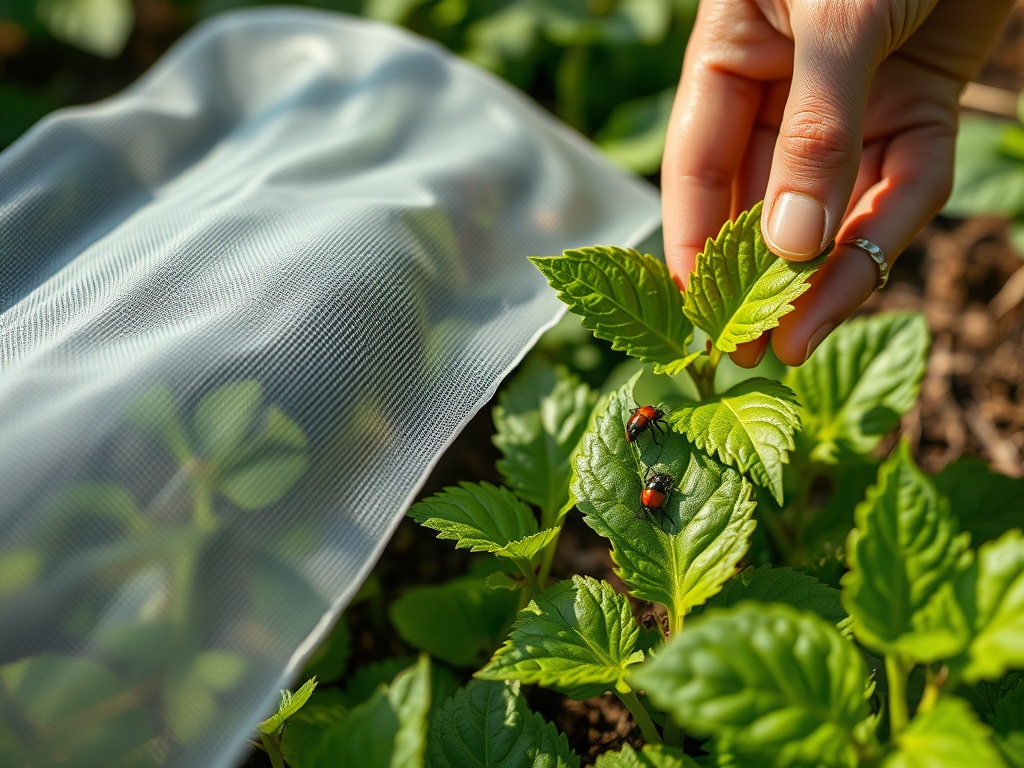
Insecticidal Soap Works by Contact
Commercial insecticidal soaps are formulated to control certain soft-bodied pests such as aphids, whiteflies, and some mites when the spray contacts them. Coverage is essential because there is little residual control after the material dries.
Do not substitute household dish detergent without reliable guidance. Formulations differ, and some detergents can damage leaf surfaces. Even a labeled insecticidal soap can cause phytotoxicity on sensitive plants or under stressful weather conditions, so follow the product label and test when recommended.
Horticultural Oils Can Be Useful but Timing Matters
Horticultural oils can suppress some insects and mites by coating them or interfering with respiration and egg survival. Modern products are more refined than older dormant oils, but application conditions still matter. High heat, drought-stressed plants, incompatible products, or sensitive species can increase plant-injury risk.
The label identifies the crops, pests, rate, and timing for that product. Do not assume that a product described as neem, mineral, botanical, or horticultural oil is interchangeable with another formulation.
Bt Is Targeted Not Universal
Bacillus thuringiensis products contain strains that affect particular groups of insects. A Bt product used against caterpillars must be eaten by susceptible larvae and works best when the insects are young. It will not solve a beetle, aphid, or mite problem simply because all of those organisms are "bugs."
Treat "Natural" Insecticides With the Same Respect as Other Pesticides
Some pesticides derived from plants, minerals, or microorganisms are allowed in organic production systems, but that status is not a safety guarantee. The EPA distinguishes organic-use labeling from claims about harmlessness. Its current lawn-and-garden pesticide guidance recommends using pesticides carefully and as part of an IPM approach.
Read the entire label. Pay attention to protective equipment, edible-crop restrictions, pollinator precautions, reentry information, application intervals, and environmental warnings. The label is the legal instruction for a registered pesticide product in the United States.
Protect Pollinators and Beneficial Insects
Do not spray open flowers when bees and other pollinators are actively foraging unless the label specifically permits the use and the treatment is necessary. Choose the most targeted method and timing possible. If a pest is concentrated on a few leaves, treating the entire yard is rarely a proportionate response.
Physical exclusion, sanitation, and early hand removal are especially useful because they can reduce the need for later chemical intervention. A garden with some insect activity is normal; ecological function depends on insects as well as plants.
Irrigation Can Prevent Some Stress-Related Confusion
Plants with drought stress, root problems, or overwatering symptoms are sometimes treated for pests they do not have. Check soil moisture and roots before assuming leaf wilt is insect damage. Comparing drip irrigation and soaker hoses can help you improve root-zone watering without soaking the entire garden surface.
A Simple Escalation Ladder
First, identify the pest and confirm that damage is increasing. Second, correct the condition that may be supporting it. Third, use exclusion, removal, pruning, trapping, or water where appropriate. Fourth, protect natural enemies and continue monitoring. Only then consider a pesticide that is labeled for the exact crop and pest, and apply it at the smallest effective scale permitted by the label.
If repeated treatments are needed every season, the deeper issue may be crop selection, planting time, site conditions, or a persistent local pest. A local Extension office can often help identify a more durable solution.
Control the Problem Without Turning the Garden Into a Treatment Zone
Effective organic pest control is not a collection of miracle sprays. It is a decision process that combines observation, prevention, physical controls, biological activity, and careful product use. The smaller and earlier the intervention, the easier it is to stay targeted.
Start this week by inspecting plants before watering, photographing unfamiliar damage, and removing only the clearly identified problem. That habit usually gives you better information than treating first and diagnosing later.
This pest-control information is educational and does not replace product labels, local pesticide regulations, professional pest-control advice, or Extension recommendations. Pesticide uses and registrations vary by location and crop; always follow the current label and local law.[/