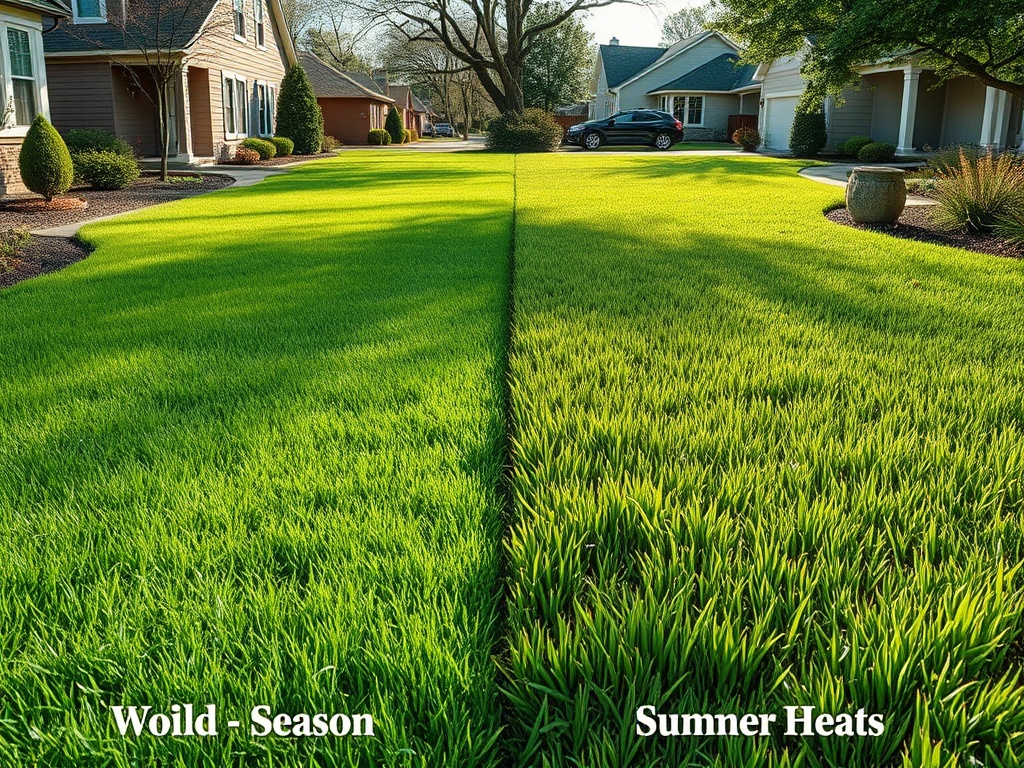
Cool-season grass is generally better where summers are moderate and winters are cold, while warm-season grass is usually better adapted to long hot summers and milder winters. The right choice depends on regional climate, sun, soil, irrigation expectations, traffic, and how much seasonal dormancy you are willing to accept.
Turf Decision Brief: Do not choose grass by color or a neighbor’s lawn alone. Match the turf species to your climate and site first, then compare shade tolerance, establishment method, seasonal growth, maintenance timing, and the appearance you want during dormancy.
The Main Difference Is the Growth Cycle
Turfgrasses are commonly grouped by the temperatures in which they grow most actively. University of Georgia Extension’s lawn-grass selection guide explains that cool-season and warm-season species have different seasonal growth patterns, strengths, and maintenance timing. That growth cycle affects nearly every lawn-care decision, from seeding and fertilizing to aeration and weed management.
Cool-season turf makes much of its growth during cooler portions of the year. University of Minnesota Extension’s lawn-care calendar describes cool-season grasses as growing strongly in spring and fall and slowing during summer heat and drought. Warm-season grasses, by contrast, are most active during the hot part of the year and commonly go dormant when temperatures fall.
That does not mean one group is “better.” It means each group is adapted to a different seasonal rhythm.
Cool-Season and Warm-Season Grass at a Glance
| Decision factor | Cool-season turf | Warm-season turf |
|---|---|---|
| Strongest growth period | Spring and fall | Late spring through summer |
| Best general climate fit | Cooler and transitional regions | Warmer and southern regions |
| Typical winter appearance | Often remains greener longer where conditions allow | Commonly turns tan or brown in dormancy |
| Summer heat response | Can slow or stress during prolonged heat | Usually better adapted to sustained heat |
| Common establishment options | Many species are readily seeded; sod is also available | Species vary; some are seeded, others commonly sodded, plugged, or sprigged |
| Maintenance timing | Major renovation often aligns with late-summer or fall growth | Renovation generally aligns with active warm-season growth |
| Shade tolerance | Varies by species; some cool-season fescues tolerate shade relatively well | Varies widely; bermudagrass generally prefers strong sun |
Where Cool-Season Grass Makes Sense
Cool-season turf is common in the northern United States and in some transition-zone lawns. Familiar choices include Kentucky bluegrass, tall fescue, fine fescues, and perennial ryegrass. They are not interchangeable. Kentucky bluegrass can form a dense lawn under suitable conditions, tall fescue is often valued for adaptability, and fine fescues can be useful where lower fertility or partial shade is a concern.
The key advantage is that these grasses are biologically aligned with cooler spring and fall weather. Their main challenge is summer stress. A lawn exposed to intense heat, drought, reflected heat from pavement, or limited irrigation may thin or enter summer dormancy depending on species and conditions.
Where Warm-Season Grass Has the Advantage
Warm-season choices include bermudagrass, zoysiagrass, centipedegrass, and St. Augustinegrass in regions where they are adapted. They are built for active growth during warm weather. In a sunny yard with a long hot season, that can be a major advantage.
Warm-season grasses also differ in texture, shade response, fertility needs, mowing height, and establishment method. Bermudagrass is known for vigorous spreading and sun preference, while other species may offer different compromises. Local Extension recommendations should guide species and cultivar selection because adaptation can change substantially across a state or region.
Climate Comes Before Appearance
A grass that looks attractive in a photograph may be poorly suited to your temperature extremes. Start with your region, then narrow the list using winter cold, summer heat, rainfall, and typical drought periods. The transition zone is especially challenging because both cool-season and warm-season grasses can experience part of the year outside their preferred conditions.
Do not use the USDA Plant Hardiness Zone alone as a turf selector. Hardiness zones are useful for minimum winter temperature context, but turf performance also depends on summer heat, humidity, disease pressure, soil, and management. A county Extension office or state turf program can usually offer a much more precise recommendation.
Sun and Shade Can Eliminate Otherwise Good Options
Bermudagrass is a poor choice for heavily shaded sites in many regions, while some fescues can perform better with limited light. Even so, no turfgrass thrives in deep shade with strong tree-root competition. If a section of lawn repeatedly thins despite appropriate care, a shade-adapted groundcover, mulch bed, or other landscape use may be more practical than reseeding the same grass every year.
This is where the lawn should be considered as one element in the larger landscape. If you are redesigning the property, backyard landscaping strategies can help you decide where turf adds functional value and where planting beds or hardscape may reduce maintenance.
Water and Soil Affect Both Groups
Neither category removes the need for good soil and sensible irrigation. Compacted soil limits root growth, excessive irrigation can encourage disease or shallow rooting, and poorly timed watering can waste water. Soil testing is useful before making major fertilizer or lime decisions because nutrient needs and pH preferences differ by species and region.
Compare Maintenance Timing Not Just Maintenance Amount
A lawn can be “low maintenance” only relative to the standard you set. A high-appearance lawn of either group may require frequent mowing, careful fertility, irrigation management, pest monitoring, and seasonal renovation. A lower-input lawn may accept more color variation, weeds, dormancy, or slower recovery from traffic.
Maintenance timing differs sharply. Cool-season fertilization and renovation often focus on cooler growth periods. Warm-season lawns are generally managed most intensively during late spring and summer. Performing a major practice at the wrong point in the growth cycle can stress the turf rather than improve it.
Tools also influence the quality of routine care. Clean, sharp cutting equipment helps produce cleaner work, and the guide on maintaining garden hand tools covers a practical routine for cleaning, sharpening, and storage.
Think About Traffic and Recovery
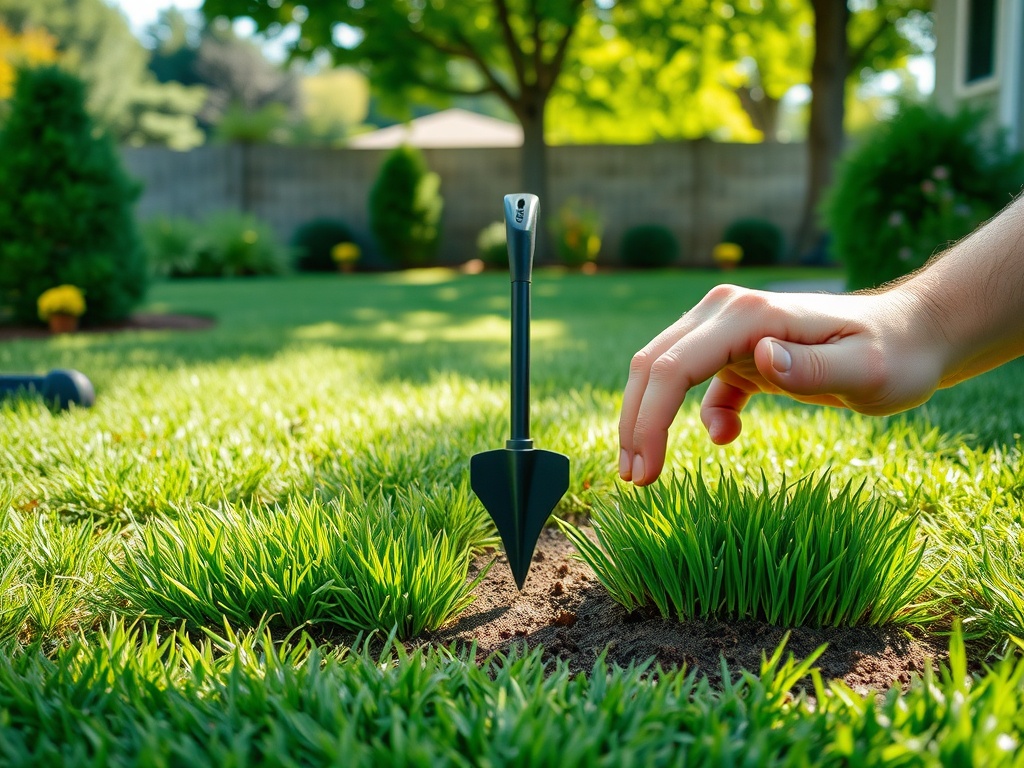
Lawns used for children, pets, entertaining, or frequent foot traffic need a grass that can tolerate wear and recover under local conditions. Spreading grasses can repair small damaged areas through rhizomes or stolons, while bunch-type grasses rely more heavily on tillering and overseeding for repair. That growth habit is one reason two lawns in the same climate can respond differently to the same traffic.
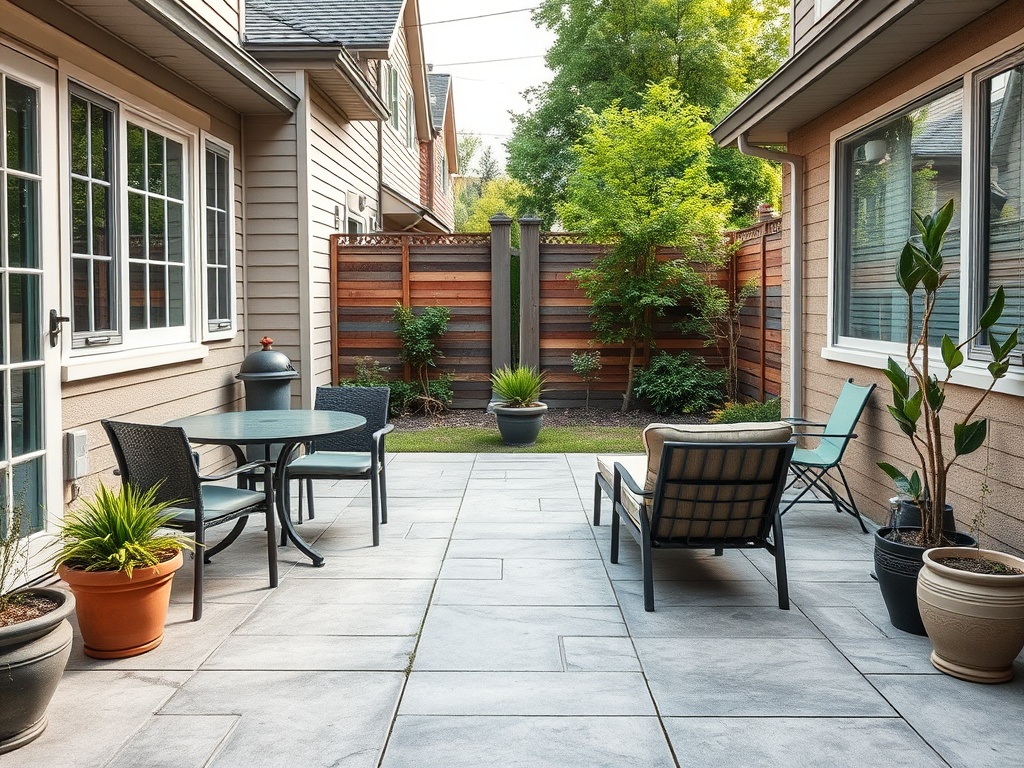
If a patio or entertaining zone absorbs the heaviest foot traffic, the surrounding turf may stay healthier. A compact patio layout can also reduce random paths across the lawn by giving movement and seating a defined surface.
A Practical Decision Framework
Choose cool-season turf when your region clearly favors it, you value spring and fall growth, and your site can support the species through summer stress. Choose warm-season turf when sustained summer heat dominates, the site receives enough sun for the selected species, and winter dormancy is acceptable.
For a transition-zone property, compare two or three locally recommended species rather than choosing a category first. Ask which option best matches your sun, soil, irrigation, traffic, desired mowing height, and tolerance for dormancy. If every candidate demands more input than you want to provide, reducing the lawn area may be the better landscape decision.
Match the Grass to the Calendar
A successful lawn starts with adaptation, not a bag of seed or a sod sample. Identify your climate and site constraints, choose a locally tested species or cultivar, and then schedule care around its natural growth cycle. The result is usually more predictable than forcing a grass to perform outside the conditions it prefers.
This lawn-care information is educational and general. Turf recommendations, pesticide rules, watering restrictions, fertilizer timing, and species performance vary by region; use current local Extension guidance and product labels, and consult qualified professionals for site-specific issues.[/