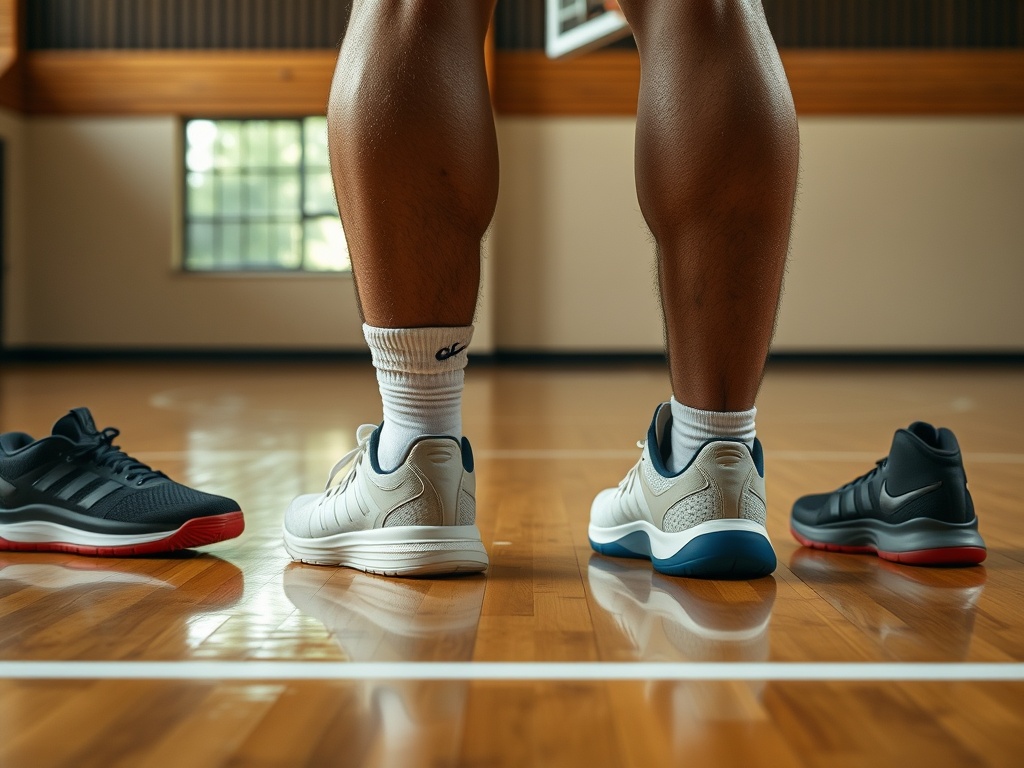
The right basketball shoe should match how and where you play: cushioning for landing comfort, traction for stopping and cutting, and containment for lateral stability. Ankle support is not only collar height; fit, heel lockdown, outsole width, and movement control matter just as much.
TL;DR:
- Try shoes with the socks and braces you actually use for games.
- Prioritize traction and containment before cosmetic style, especially if you cut hard or play on dusty courts.
- Replace shoes when grip, cushioning, or upper support noticeably decline, not only when the shoe looks worn.
Cluster: Equipment, Gear & Buying Guides | Intent: Commercial Investigation | Audience: Solution-Aware | Funnel: Middle of Funnel
Start with your playing profile
A guard who changes direction constantly may need court feel, grip, and a secure fit. A forward who absorbs contact may value cushioning and stability. A casual player on outdoor courts may need durable rubber more than premium foam. The best shoe is not the most expensive model; it is the model that fits the athlete, court, and workload.
Cushioning: comfort versus responsiveness
Cushioning helps reduce harsh landing feel, but too much soft foam can feel unstable for quick cuts. Responsive cushioning returns energy and keeps the foot from sinking deeply. Players who jump and land often may prefer more impact protection, while players who rely on speed may prefer a lower, more connected ride. Brand shoe finders, including Nike’s basketball shoe finder, often describe models by traction, cushioning, and responsiveness, which are useful comparison categories. Readers can connect this with The Complete Glossary of Sports Terms Every New Fan Should Know for a practical next step and review Nike basketball shoe finder when they need an authoritative reference.
Grip: the feature players notice fastest
Traction affects stopping, starting, and changing direction. Indoor players should check how the outsole handles dust. Outdoor players should look for deeper, more durable patterns. Squeak alone does not prove grip; the real test is controlled stopping without sliding. If the outsole picks up dust quickly, a shoe may require frequent wiping during games.
| Focus area | What it means | How to use it |
|---|---|---|
| Cushioning | Landing comfort and impact feel | Jump-heavy or heavier players |
| Traction | Stops, starts, and cuts | Dusty indoor or outdoor courts |
| Containment | Keeps foot from sliding | Quick lateral movers |
| Durability | Outsole and upper lifespan | Outdoor or frequent play |
Ankle support is really stability
Many buyers assume a high-top automatically prevents ankle sprains. Collar height can affect feel, but support also comes from heel lockdown, sidewall structure, torsional stiffness, and a wide stable base. Players with prior ankle injuries should follow medical guidance and consider braces or taping when recommended. The AAOS overview of ankle sprains is a helpful reminder that injury care and footwear choice are different decisions. For a related angle, see How to Practice Ball Control When You Don’t Have a Full Team or Court, then compare the idea with AAOS ankle sprain basics where relevant.
Fit checks before buying
Leave enough toe room without letting the foot slide. The heel should stay planted when you stop. The midfoot should feel secure without numbness. Try lateral shuffles, controlled jumps, and hard stops if the store allows it. If shopping online, confirm return rules before wearing shoes on court. A shoe that feels fine while standing can fail during side-to-side movement.
Budget and replacement timing
Beginners do not need a flagship signature shoe. Spend enough to get safe traction and stable containment, then upgrade when your playing volume or needs become clearer. Replace shoes when grip becomes unreliable, cushioning feels dead, or the upper no longer holds the foot. Pair this guide with ball-control practice advice so equipment supports skill rather than replacing it.
Applied checklist for basketball shoe buying guide
Before using the advice, define the exact situation. A fan, athlete, coach, parent, buyer, or player should know what decision is being made, what information is reliable, and what can be tested immediately. Write down the current goal in one sentence. Then choose the smallest action that would make the next practice, game, purchase, or viewing experience clearer. This keeps the article practical instead of turning it into background reading only.
Use a three-part checklist: context, action, and review. Context asks where the advice will be used and what limits exist. Action asks what the reader will do first. Review asks what evidence will show progress or a better decision. In sports and games, that evidence may be cleaner execution, safer behavior, lower cost, better understanding, more confident communication, or less emotional reaction under pressure.
Keep the checklist honest. Do not count a single good result as proof that the whole approach works, and do not treat one poor result as failure. Game environments vary. Courts, fields, opponents, teammates, devices, venues, rules, and personal stress can all change the outcome. The most useful habit is to compare similar situations over time and adjust one variable at a time.
Quality signals to watch in basketball shoe buying guide
The strongest signal is repeatability. A term is understood when the reader can recognize it during live play. A drill is working when control holds up under mild pressure. A buying decision is sound when the product or ticket fits the actual use case, not just the marketing claim. A mental routine is useful when it shows up after an error, not only during calm practice. A ranked routine is healthy when it supports learning without turning every session into a stress test.
The second signal is transfer. Advice should move from the page into a real setting. For athletes, that might mean using the cue during a scrimmage. For coaches, it might mean changing a constraint and observing a better decision. For parents, it might mean asking sharper questions before joining a program. For fans, it might mean watching a game with more confidence and fewer assumptions. Transfer is more valuable than memorization.
The final signal is sustainability. A plan that only works when the reader has unlimited time, money, energy, or perfect conditions is fragile. Good sports guidance respects recovery, safety, budget, access, and motivation. It also leaves room for uncertainty. When a claim involves current rules, ticket policies, eligibility, rankings, or official procedures, the reader should check the relevant authority before acting.
A useful final test is whether the reader can explain the idea to someone else in plain language. If the explanation becomes complicated, return to the simplest version: what is happening, why it matters, what action comes next, and what evidence would show improvement. That four-part pattern keeps the guidance practical for beginners while still giving intermediate readers enough structure to refine their choices. It also makes the article easier to revisit later, because the reader can scan the main cues and apply them again without starting from zero.
For readers building a broader foundation, How to Buy Game Tickets Without Overpaying or Getting Scammed adds another perspective without pulling this article away from its main topic.
Choose performance before style
Use this article as a practical reference, then apply one small piece during the next practice, match, purchase decision, or viewing session. The best next step is not to memorize everything at once; it is to test one idea, observe the result, and build from there.