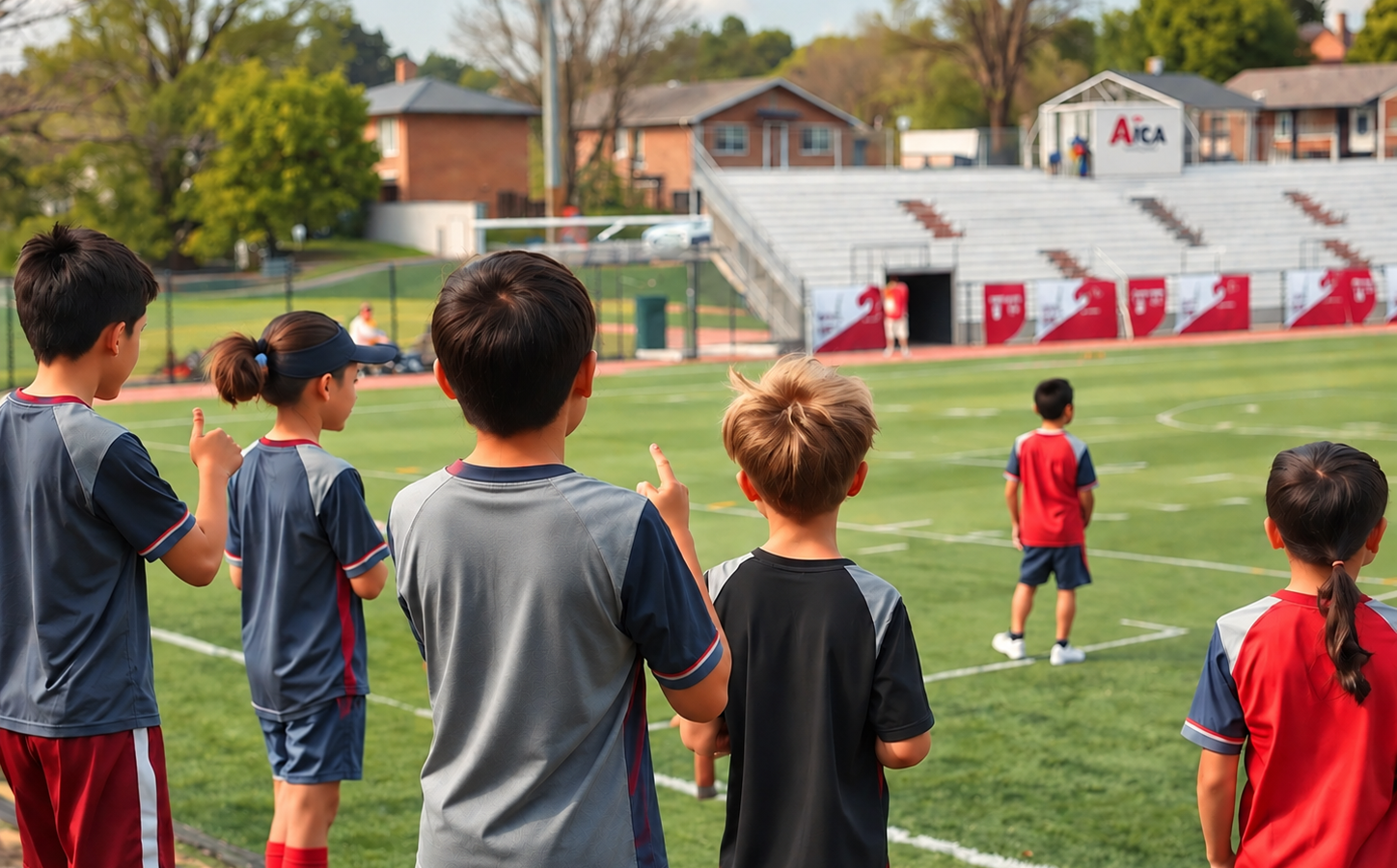
A rec league usually makes sense when the priority is access, enjoyment, basic skill growth, and flexible family logistics. A travel team can make sense when an athlete is motivated, physically ready, emotionally prepared, and the family can handle the time, cost, and competition demands.
TL;DR:
- Choose the environment that matches the child’s current stage, not the parent’s fear of falling behind.
- Travel teams can offer stronger competition, but they also bring cost, workload, and pressure.
- A healthy pathway leaves room for rest, school, friendships, and multi-sport development.
Cluster: Youth Sports & Player Development | Intent: Informational | Audience: Intermediate | Funnel: Top of Funnel
Frame the choice around development
The rec-versus-travel decision is not simply casual versus serious. It is a fit question. Some athletes develop confidence and joy in a recreational league before seeking higher competition. Others are ready for more structure earlier. The wrong environment can make a motivated athlete bored or make a developing athlete anxious. The best choice supports growth now while keeping future options open.
What rec leagues usually do well
Recreational leagues tend to offer lower cost, shorter travel, broader participation, and a more forgiving entry point. They are especially useful for beginners, multi-sport athletes, and children still learning whether they enjoy a sport. Rec leagues can also be a good place for parents to learn the language of the game before committing to a more intense schedule. Readers can connect this with How Coaches Use Small-Sided Games to Build Better Decision-Making for a practical next step and review American Academy of Pediatrics sports specialization report when they need an authoritative reference.
What travel teams can add
Travel teams may offer stronger competition, more frequent practices, better coaching ratios, tournament exposure, and teammates with similar goals. Those benefits are real when the program is well run. They are less useful if the athlete is not enjoying the sport, is physically overwhelmed, or is playing mainly because adults are pushing the pathway.
| Focus area | What it means | How to use it |
|---|---|---|
| Rec league | Access, fun, fundamentals | New or multi-sport athletes |
| Travel team | Competition and structure | Motivated, ready athletes |
| Hybrid path | Rec plus clinics or camps | Families testing commitment |
| Pause or reset | Rest and reflection | Burnout or recurring pain |
Health, rest, and specialization
Youth sports decisions should include workload and recovery. The American Academy of Pediatrics report on sports specialization warns families to consider physical and psychological risks when training becomes intensive. That does not mean travel sports are automatically harmful. It means families should monitor rest, overuse pain, motivation, and whether a child still has room for broad development. For a related angle, see How to Improve Aerobic Fitness Without Losing Power and Speed, then compare the idea with CDC HEADS UP youth sports where relevant.
Questions parents should ask
Ask who coaches the team, how playing time is handled, how conflicts are communicated, how much travel is required, and what the expected annual cost is. Ask how injuries are managed and whether safety education is built into the program. CDC HEADS UP materials can help families and coaches understand concussion awareness, which should matter at every level.
A practical decision ladder
Start with the athlete’s interest, then evaluate readiness, then compare programs. If the child is enthusiastic, handles feedback, wants more challenge, and is recovering well, a travel tryout may be reasonable. If the child is new, uncertain, or already stressed, rec play plus targeted skill work may be the better next step. Small-sided games and balanced conditioning can improve development in either pathway.
Applied checklist for rec league vs travel team
Before using the advice, define the exact situation. A fan, athlete, coach, parent, buyer, or player should know what decision is being made, what information is reliable, and what can be tested immediately. Write down the current goal in one sentence. Then choose the smallest action that would make the next practice, game, purchase, or viewing experience clearer. This keeps the article practical instead of turning it into background reading only.
Use a three-part checklist: context, action, and review. Context asks where the advice will be used and what limits exist. Action asks what the reader will do first. Review asks what evidence will show progress or a better decision. In sports and games, that evidence may be cleaner execution, safer behavior, lower cost, better understanding, more confident communication, or less emotional reaction under pressure.
Keep the checklist honest. Do not count a single good result as proof that the whole approach works, and do not treat one poor result as failure. Game environments vary. Courts, fields, opponents, teammates, devices, venues, rules, and personal stress can all change the outcome. The most useful habit is to compare similar situations over time and adjust one variable at a time.
Quality signals to watch in rec league vs travel team
The strongest signal is repeatability. A term is understood when the reader can recognize it during live play. A drill is working when control holds up under mild pressure. A buying decision is sound when the product or ticket fits the actual use case, not just the marketing claim. A mental routine is useful when it shows up after an error, not only during calm practice. A ranked routine is healthy when it supports learning without turning every session into a stress test.
The second signal is transfer. Advice should move from the page into a real setting. For athletes, that might mean using the cue during a scrimmage. For coaches, it might mean changing a constraint and observing a better decision. For parents, it might mean asking sharper questions before joining a program. For fans, it might mean watching a game with more confidence and fewer assumptions. Transfer is more valuable than memorization.
The final signal is sustainability. A plan that only works when the reader has unlimited time, money, energy, or perfect conditions is fragile. Good sports guidance respects recovery, safety, budget, access, and motivation. It also leaves room for uncertainty. When a claim involves current rules, ticket policies, eligibility, rankings, or official procedures, the reader should check the relevant authority before acting.
A useful final test is whether the reader can explain the idea to someone else in plain language. If the explanation becomes complicated, return to the simplest version: what is happening, why it matters, what action comes next, and what evidence would show improvement. That four-part pattern keeps the guidance practical for beginners while still giving intermediate readers enough structure to refine their choices. It also makes the article easier to revisit later, because the reader can scan the main cues and apply them again without starting from zero.
For readers building a broader foundation, The Complete Glossary of Sports Terms Every New Fan Should Know adds another perspective without pulling this article away from its main topic.
Pick the path that keeps growth healthy
Use this article as a practical reference, then apply one small piece during the next practice, match, purchase decision, or viewing session. The best next step is not to memorize everything at once; it is to test one idea, observe the result, and build from there.