Efficient impact-damage repair starts by identifying what was hit, whether the assembly has a fire, acoustic, moisture, or abuse-resistant function, and why the impact keeps happening. A durable repair is more than patch compound and paint; it restores the surface while reducing the chance of repeat damage.
Interior impact repair brief: Triage the assembly, protect occupants, repair with compatible materials, match texture and sheen, and address the traffic pattern that caused the damage. Fire-rated gypsum systems need extra care; the Gypsum Association’s GA-225 repair guidance is a useful reference for rated assemblies.
First decide what the wall is doing
A wall can be decorative, separating, fire-resistance-rated, acoustic, moisture-resistant, abuse-resistant, or part of a historic interior. Corners and trim can protect edges, define circulation, or hide transitions. Before repair work begins, the team should know whether the damaged area is a simple finish patch or part of a required assembly.
In commercial buildings, this distinction matters. A hole in a rated corridor wall, a damaged stair enclosure, or a broken protection plate near a healthcare service route has different implications than a dent in a back-office partition. The repair method should follow the assembly’s function, local code requirements, and manufacturer or industry guidance.
Historic plaster also needs a different mindset than modern gypsum board. The National Park Service Preservation Brief 21 on flat plaster focuses on traditional repair approaches for historic plaster walls and ceilings. That is useful when a building’s interior character is part of its value.
Triage damage by material, exposure, and visibility
Start with the material: gypsum board, plaster, wood trim, metal corner bead, impact-resistant panel, tile, concrete block, or specialty finish. Then note exposure: dry interior, wet area, food service, healthcare, school corridor, loading path, or public lobby. Last, note visibility: hidden back-of-house damage can be repaired differently from a lobby corner in direct light.
The goal is not to overbuild every patch. It is to avoid under-repairing the areas where performance matters. A small dent in a painted office wall may need sanding, compound, primer, and paint. A recurring cart impact at a corridor corner may need corner guard review, traffic control, or storage changes in addition to surface repair.
Repair workflow for gypsum board, trim, and corners
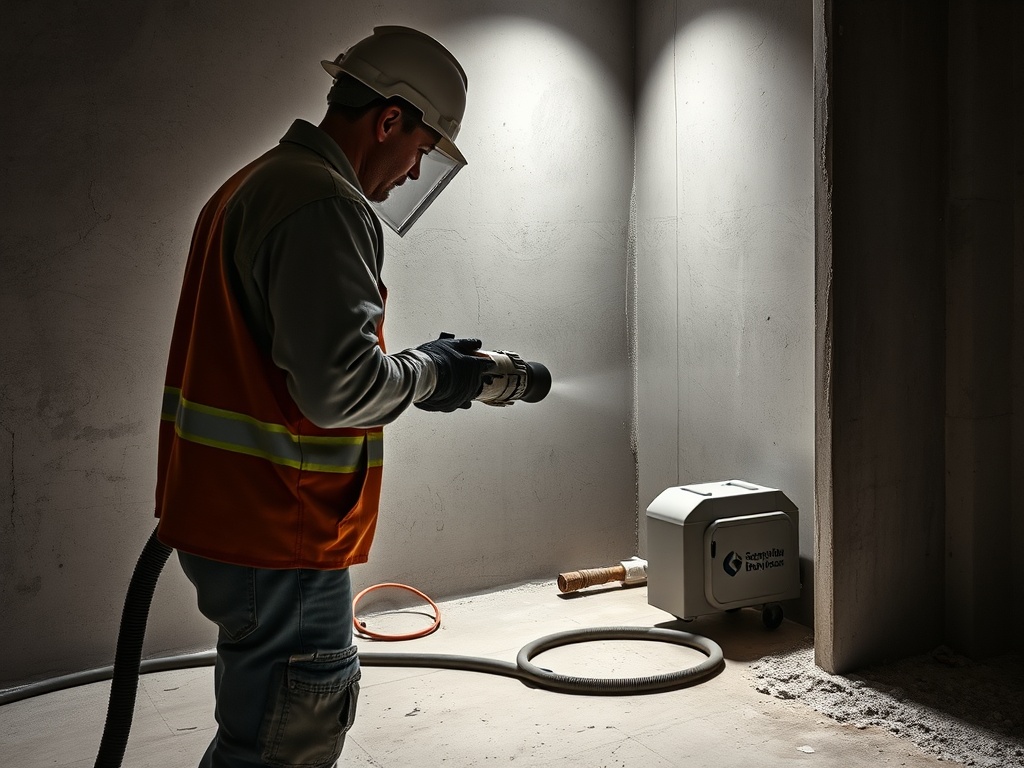
The workflow begins with containment. Protect adjacent finishes, control dust, and keep occupants away from tools and wet materials. If ladders are used, OSHA’s general industry ladder requirements are a reminder that access equipment should be inspected and used correctly.
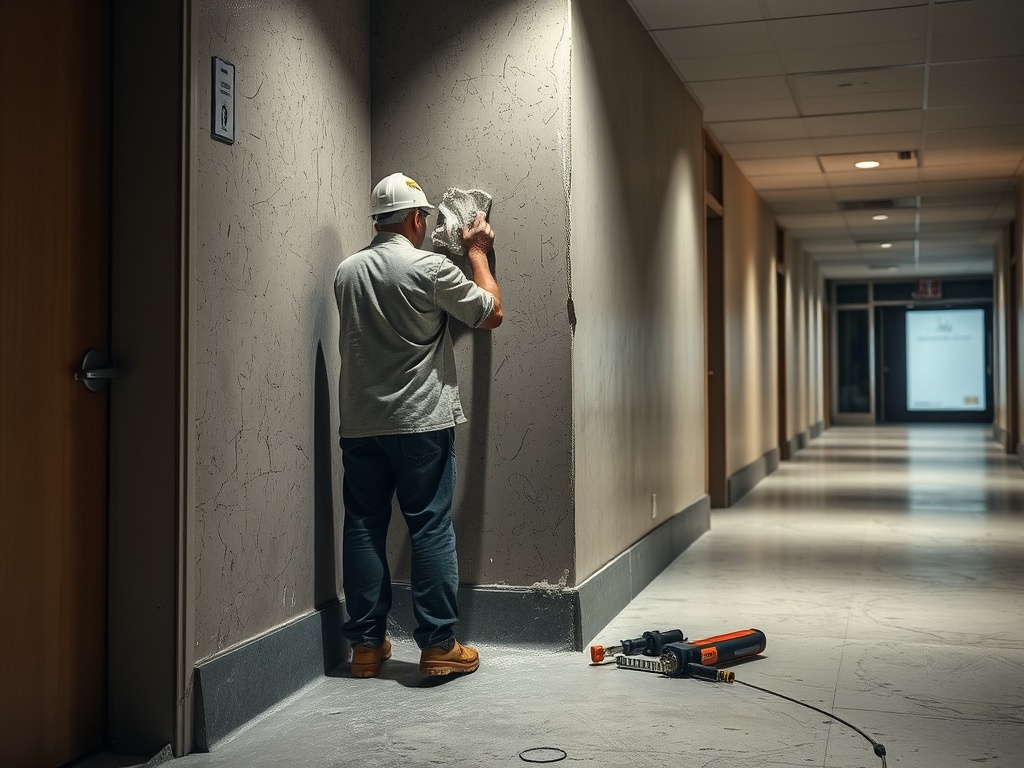
Next, remove loose material and square or stabilize the damaged area only as much as needed. For gypsum board, patch material should be supported so it does not float. For trim, split or crushed pieces may need replacement rather than filler. For corner bead, a dented section may need to be cut back and replaced if it has lost shape.
After structural patching, finish work determines whether the repair disappears. Feathering, texture matching, primer selection, paint sheen, and lighting angle all affect the result. In some cases, painting a full wall section to a natural break looks better than touching up a small spot.

When a patch needs more than compound
Patching compound can hide shallow damage, but it does not solve crushed substrate, loose corner bead, water-softened board, or damaged rated assemblies. If the surface flexes, sounds hollow, smells musty, or has staining, the team should investigate before closing the wall.
In recurring damage zones, ask what hits the wall. Carts, beds, pallet jacks, trash bins, ladders, doors, and stored materials all leave different patterns. Repairing the wall without changing the collision point can create a maintenance loop. A facility team improving janitorial closets, shops, and storage rooms that improve efficiency may eliminate some of the cart and storage conflicts that cause repeated corner damage.
Finish matching checklist for busy interiors
| Repair item | What to check | Why it affects the result |
|---|---|---|
| Substrate support | Patch backing, fasteners, intact edges | Prevents cracking and soft spots |
| Joint and corner profile | Straightness, bead alignment, corner radius | Visible under side lighting and at door openings |
| Surface texture | Spray, skim, brush, roller stipple, plaster texture | Texture mismatch often shows through paint |
| Primer and sheen | Porosity, stain blocking, gloss level | Uneven sheen can reveal patches after repainting |
| Protection detail | Corner guards, rails, bumper zones, cart routes | Reduces repeat impact in high-traffic areas |
Damage patterns that point to an operational fix
Wall damage near storage rooms often signals that carts have no proper turning radius or parking zone. Damage near exterior doors may indicate delivery routes. Trim damage at residential remodels may reflect moving paths and staging issues. On larger projects, unresolved floor level changes or tight corridors may require design review.
Foundation or framing movement can also show up as cracks that look like impact damage at first glance. If cracks reopen quickly after repair, widen at corners, or align with structural transitions, review broader building movement. A general overview of common foundation types and where each works best can help owners ask when a cosmetic repair may not be enough.
For homes and small commercial properties, repeated finish damage may influence the larger decision between updating an existing space or rebuilding around a new plan. That is where new construction vs major remodel: which fits your goals becomes a useful planning comparison.
Estimating should separate repair labor from root-cause prevention. A wall patch, repaint, and trim replacement may be the visible cost, but the higher-value question is why the damage occurred. If a small corner guard, cart route change, door stop adjustment, or storage change prevents repeated damage, it may reduce future disruption even when the initial repair scope is modest.
Lighting should be checked before closeout. Repairs that look smooth under work lights may show ridges, flashing, or texture changes under corridor lighting or daylight. A final side-light review helps crews correct defects before furniture, carts, or occupants return.
Make the repair last beyond the paint touch-up
A good impact repair restores performance, blends visually, and reduces repeat damage. Document the material, paint color and sheen, texture method, protection changes, and cause of damage. Over time, that record helps facility teams identify patterns instead of responding to each dent as a one-off task.
Use the next repair request to ask two questions: what function did this assembly serve, and what caused the impact? This content is for informational and educational purposes only and does not constitute engineering, building-code, preservation, safety, legal, compliance, or project management advice; qualified professionals should evaluate rated, structural, historic, or hazardous-material conditions.