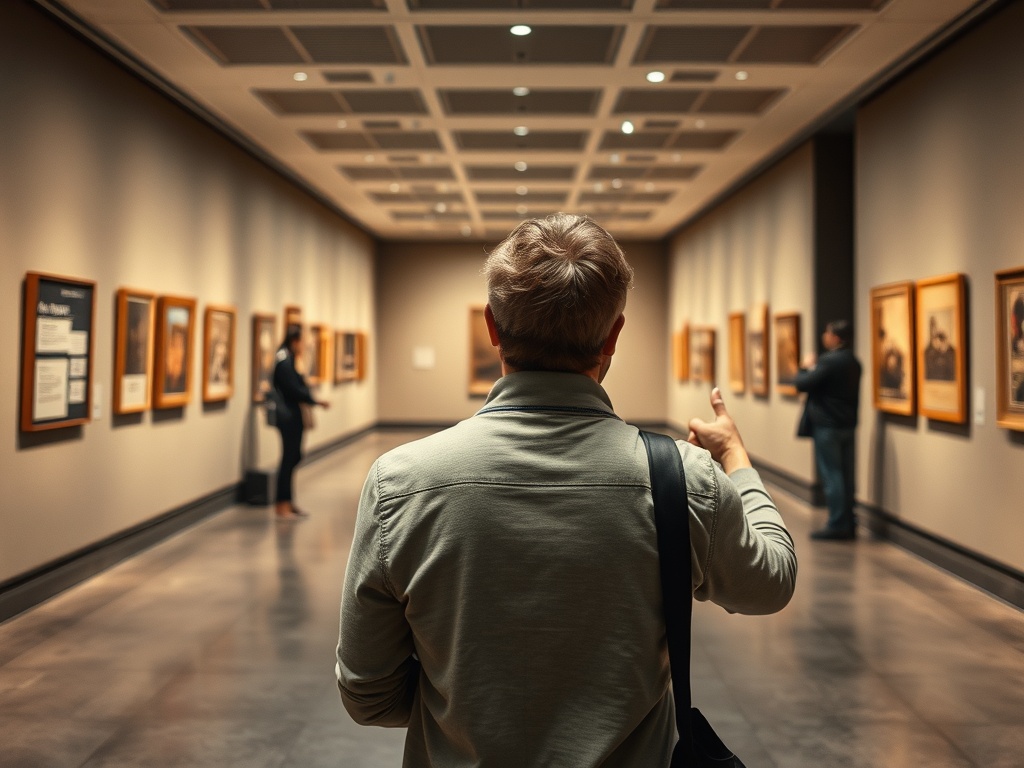
To plan a museum visit that goes deeper than the gift shop, choose a purpose before you arrive, study a few key objects, give yourself time to look slowly, and leave with notes or questions instead of trying to see everything. A better visit is less about coverage and more about attention.
Useful plan: Pick one museum, one theme, and three to five objects. Read just enough before you go, look before reading every label, take breaks, and review what stayed with you afterward.
Start with a focused reason to go
Many museum visits feel shallow because the goal is too broad. “See the museum” is not a plan. Choose a tighter purpose, such as portraits, materials, local history, one artist, one period, religious objects, conservation, photography, design, or how families use the space. A focused purpose gives your eyes a job.
The Smithsonian’s visit planning page is a good example of how large institutions encourage visitors to check hours, locations, access, and exhibitions before arrival. The Smithsonian American Art Museum’s visitor page also shows why practical details such as accessibility, directions, and current exhibitions should be part of the plan rather than afterthoughts.
You do not need to become an expert first. Ten minutes of preparation can change the visit. Look at the museum map, pick one exhibition, and identify a few works or rooms that match your reason for going.
Build a small object list
A museum can overwhelm even experienced visitors. Instead of trying to see every room, choose three to five objects or sections. If the museum has an online collection, search before you go. If it does not, use the exhibition description. Pick at least one object that already interests you and one that looks unfamiliar.
For each object, write one question. Who made it? What material is it? What was it used for? Who paid for it? How did it enter the museum? What is missing from the label? These questions turn passive viewing into active looking.
This is also where provenance becomes useful. If an object’s label mentions acquisition, donor history, or ownership, the guide to provenance in the art world can help you understand why those details matter.
Use a route, not a race
Plan your route around energy. Start with the exhibition or object you care about most. Do not save it for the end, when you may be tired. If the museum is large, choose one floor or wing. Build in a break after 60 to 90 minutes. Looking is mental work.
A deeper visit often has fewer rooms. Give yourself permission to skip famous objects if they do not fit your purpose that day. You can return later with a different focus.
Look before reading
Labels are helpful, but they can also take over too quickly. Spend one minute looking before reading. Notice scale, material, color, light, posture, texture, composition, sound, or placement. Ask what you can learn from the object itself.
Then read the label. Did it confirm what you saw? Did it change your interpretation? Did it introduce a fact you could not have guessed? This simple sequence makes the label a partner rather than a script.
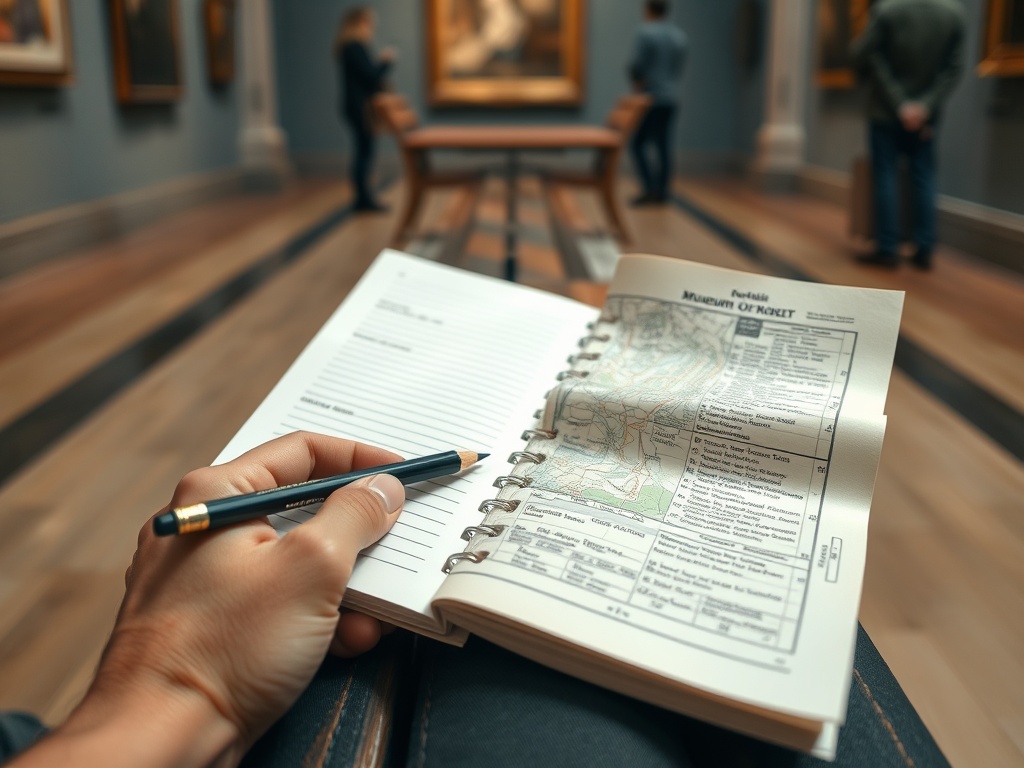
For art objects, you can use a three-pass method. First, describe what is visible. Second, interpret what the visible choices may suggest. Third, connect the object to context from the label, audio guide, or catalogue. Keep those steps separate so you do not present personal interpretation as fact.
Tools that improve the visit
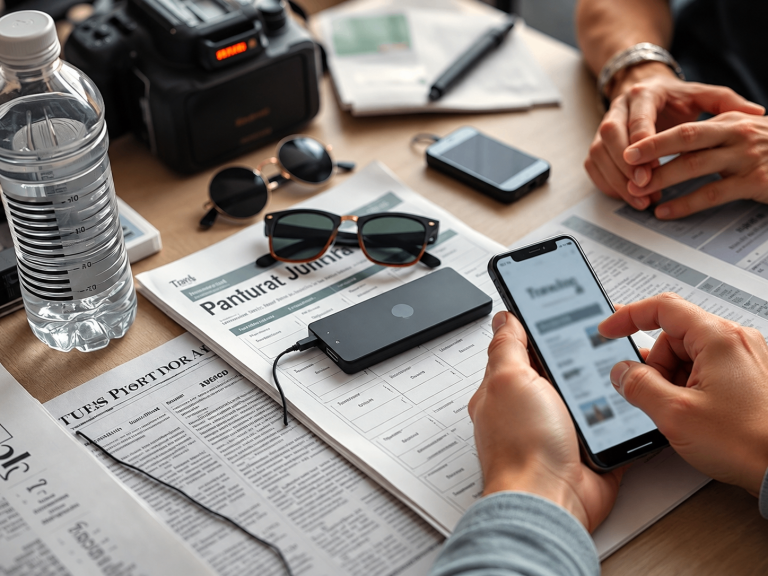
Bring a small notebook, a pencil, comfortable shoes, a water bottle if allowed, and a phone with battery. Use photos only where permitted, and do not let photography replace looking. If the museum has an audio guide, choose a few stops instead of playing every track. If there is a docent tour, check the theme before joining.
The American Alliance of Museums’ topic hub on audience engagement and visitor experience shows how much thought museums put into visitor learning, access, and interpretation. Use those resources, but keep ownership of your attention.
A step-by-step museum plan
- Check hours, ticketing, accessibility, bag rules, and photography rules.
- Choose one exhibition or theme.
- Select three to five objects or rooms.
- Write one question for each.
- Start with your highest-priority object.
- Look before reading the label.
- Take short notes after each object.
- Take a break before fatigue changes your mood.
- Visit the shop only after the main viewing goal is complete.
- Review your notes within 24 hours.
Common execution mistakes
The first mistake is overplanning. A museum visit should have direction, not a minute-by-minute script. The second is treating the gift shop as the emotional climax. Shops can be enjoyable, but they are not the collection. The third is reading every label while barely looking at the objects. The fourth is moving with the crowd instead of your own purpose.
Another mistake is expecting every object to impress you immediately. Some works reveal themselves slowly. Others may remain uninteresting to you, and that is fine. The goal is not to admire everything. The goal is to learn how your attention changes when you look more carefully.
When DIY works and when to get help
DIY works well for casual learning, repeat visits, sketching, family outings, and personal themes. A guided tour helps when the museum is historically dense, the subject is unfamiliar, or the collection involves sensitive cultural context. Curator talks, docent tours, audio guides, catalogues, and public programs can give structure without removing personal discovery.
If you are visiting for research, school, collecting, or professional reasons, contact the museum in advance. Some archives, study rooms, or special collections require appointments.
How to measure a good result
A good visit is not measured by step count or number of rooms. It is measured by recall, questions, and changed attention. Can you describe one object without looking at a photo? Did you learn a term? Did you notice a material, technique, or historical gap? Did one object make you want to read more?
Museum learning connects to other arts knowledge. An image’s technical qualities may lead you to questions about dynamic range in photography.
A poster or illustration may raise questions about commercial use and licensing. The deeper visit is the one that keeps opening better questions.
Your better museum route
Choose one museum, one purpose, and one hour of real looking. Let the gift shop be a pleasant ending, not the reason you came. The most valuable souvenir is the object you can still remember clearly after you leave.