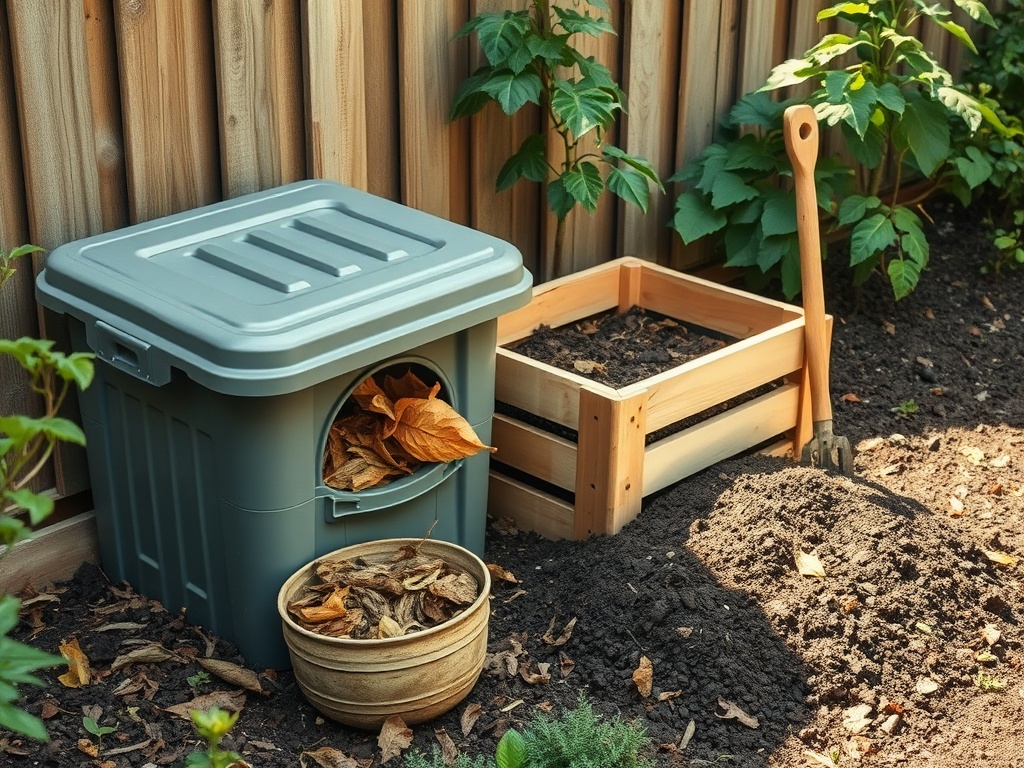
Good backyard compost comes from combining carbon-rich “browns,” nitrogen-rich “greens,” moisture, and oxygen while keeping out materials that attract pests, carry contaminants, or break down poorly in a home pile. You do not need a perfect recipe, but you do need a pile that is balanced enough to stay aerated and biologically active.
Compost Starter Note: Keep a supply of dry leaves or other browns beside the bin, bury fresh food scraps under that material, keep the pile about as damp as a wrung-out sponge, and turn it when it becomes compacted or develops an unpleasant odor.
Compost Is Managed Decomposition
Composting is an aerobic process, meaning the organisms doing much of the work need oxygen. The U.S. Environmental Protection Agency’s current home-composting guidance describes the basic ingredients as carbon-rich browns, nitrogen-rich greens, water, and air. When those elements are reasonably balanced, plant and food materials break down into a stable soil amendment.
Backyard composting is different from simply piling organic waste in a corner. Management matters. Very wet material can become airless and smelly; a pile dominated by dry leaves can sit for months with little visible change; exposed food scraps can attract animals. The goal is not laboratory precision but a repeatable routine.
What Belongs in a Home Compost Pile?
Useful browns
Dry leaves, small twigs, untreated wood chips, shredded uncoated cardboard, plain brown paper, and similar dry plant-based material supply carbon and help create air spaces. Browns are especially valuable because kitchen scraps tend to arrive in small, wet batches throughout the week.
Keep a covered container or pile of dry leaves near the compost bin. Each time you add food scraps, cover them with browns. EPA guidance recommends using substantially more browns than greens by volume in a backyard pile, which helps control moisture and odor.
Useful greens
Fruit and vegetable scraps, coffee grounds and paper filters, fresh grass clippings in moderate amounts, and green plant trimmings supply more nitrogen and moisture. Eggshells can be included after crushing, although they break down slowly.
Spread wet material through the pile rather than creating a thick, matted layer. Fresh grass clippings can become dense quickly, so mix them with dry leaves or other coarse browns.
What Should You Leave Out?
For a typical backyard pile, skip meat, fish, bones, dairy products, fats, oils, grease, pet waste, treated or painted wood, glossy paper, and heavily diseased or pest-infested plant material. EPA guidance also cautions that backyard piles often do not reach the sustained conditions needed to manage some problem materials safely.
Be careful with plants treated with persistent herbicides and with aggressive weeds that have mature seeds or difficult vegetative parts. Municipal or commercial composting programs may accept materials that are unsuitable for a home pile because industrial systems can use different temperatures and processing controls.
A Simple Browns-and-Greens Reference
| Add regularly | Add with care | Usually skip in backyard piles |
|---|---|---|
| Dry leaves | Fresh grass clippings | Meat and fish |
| Vegetable and fruit scraps | Crushed eggshells | Dairy products |
| Coffee grounds and paper filters | Small woody trimmings | Fats, oils, and grease |
| Shredded plain cardboard | Garden residues only if healthy | Pet waste and cat litter |
| Untreated wood chips | Paper only when uncoated and appropriate | Treated or painted wood |
Build the Pile for Airflow
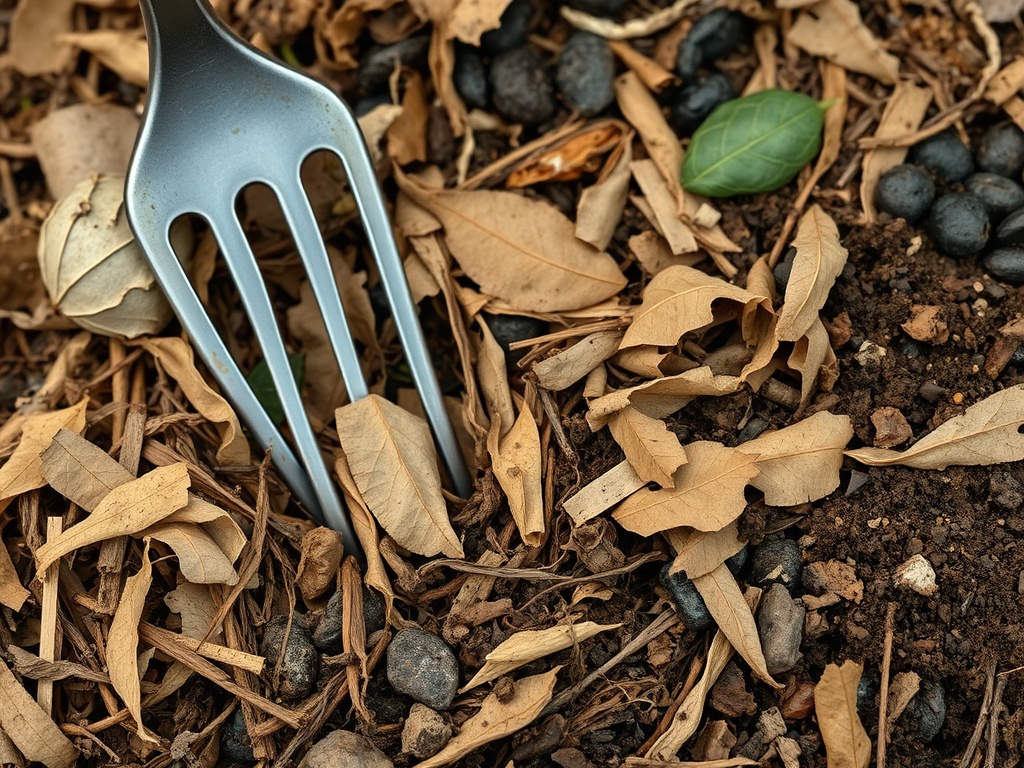
Start with a coarse layer of woody browns or similar bulky material to create air space near the bottom. Add greens in thinner layers and cover each addition with browns. If the mixture is dry, add enough water to dampen it; if it is soggy, add dry material and mix.
The EPA describes an effective pile as having moisture similar to a wrung-out sponge. That comparison is useful because it avoids false precision. Your exact moisture needs change with particle size, rainfall, bin design, and climate.
Turn When the Pile Tells You To
There is no single turning schedule that fits every backyard system. Turn the pile when it becomes compacted, develops a sour or rotten smell, or when you want to speed decomposition. Mixing moves drier material inward and adds oxygen.
A pile that smells unpleasant is often too wet or short of air. Add browns, break up dense layers, and turn it. A pile that is dry and inactive may need moisture and a fresh supply of greens. A pile that never warms can still decompose slowly, but low activity may indicate an imbalance, small volume, cold weather, or lack of moisture.
The EPA’s broader composting-process overview explains how carbon-to-nitrogen balance, moisture, particle size, and pile structure influence biological activity. Use that as a framework rather than chasing an exact backyard ratio with a scale.
Know When Compost Is Finished
Finished compost should be dark, crumbly, and earthy-smelling, with most original ingredients no longer recognizable. Letting compost cure after active decomposition gives the material time to stabilize before you use it around plants.
When adding finished compost to a raised bed, remember that compost is an amendment rather than a complete growing medium in most systems. The guide to vegetables that fit raised beds explains how bed depth, space, and soil structure influence crop choices.
Keep Rodents and Other Visitors Out
Animal problems usually become more likely when food scraps are exposed or inappropriate materials are added. Bury fresh scraps in the center of the pile and cover them with several inches of browns. Use a lid or secured bin where wildlife pressure is high, and avoid meat, dairy, grease, and similar attractants.
If rodents remain a recurring problem, reconsider the bin design and local conditions. Hardware cloth or a more enclosed system can help in some yards, but the best approach depends on the species involved and local wildlife rules.
Compost and Pest Management Should Work Together
Do not place actively diseased material into a home compost pile unless you are confident the system can handle it safely. Many backyard piles do not maintain uniform high temperatures. Removing badly infected plant material can sometimes be part of an integrated pest-management approach.
For garden problems that remain after cultural controls, review organic pest-control options through an IPM lens rather than assuming every “natural” input is harmless or necessary.
Moisture Management Continues After Composting
Compost can improve soil structure and water-holding behavior, but irrigation still needs to be matched to the plants and soil. If you use raised beds or concentrated planting zones, drip and soaker systems can help put water close to the root zone without wetting the entire surface.
Avoid using unfinished compost as a mulch layer around edible plants when recognizable food waste remains. Finished compost can be incorporated according to crop and soil needs or used as part of a surface amendment strategy.
Make Composting Easy Enough to Continue
The most sustainable home system is one that fits your routine. Keep browns within reach, choose a bin you can turn or access comfortably, and place it close enough to a water source and kitchen route that you will actually use it. A perfectly engineered bin at the far end of the property often gets less attention than a simple, well-managed one near the garden.
Begin with leaves, vegetable scraps, coffee grounds, water, and air. Learn to read moisture and odor, then adjust one factor at a time. Composting becomes much easier when you treat the pile as a living system rather than a trash container.
This composting guidance is for general educational purposes. Local rules may restrict food scraps, yard waste, bins, wildlife control, or compost use; follow local regulations and Extension guidance, especially where plant disease, pesticides, manure, or food-safety concerns are involved.[/